Choosing an Industrial Filling Machine is more than comparing advertised speeds. The right system must suit the product, container, production volume, and cleaning routine. A line filling thin juice behaves differently from one handling thick sauces or creams. Small details matter.
This guide introduces ten manufacturers with worldwide industry visibility and a range of filling technologies. It considers equipment options, application fit, customization, service support, and the information buyers should verify before requesting a quote. These factors help readers compare suppliers without treating a single specification as proof of quality. Actual performance depends on product properties, container design, operator training, and plant conditions. A machine that looks efficient on paper may require more changeover time than expected.
The manufacturers listed here serve different production needs, from compact operations to high-volume facilities. Their offerings and regional support can change, so buyers should confirm current specifications directly with each company. Ask for product-specific trials where possible. Review cleaning access, spare-part availability, integration requirements, and expected output under realistic operating conditions. No ranking can replace a factory assessment, and not every manufacturer will suit every project. That is worth remembering. With practical questions and clear requirements, this overview can help narrow the field and support a more informed shortlist.
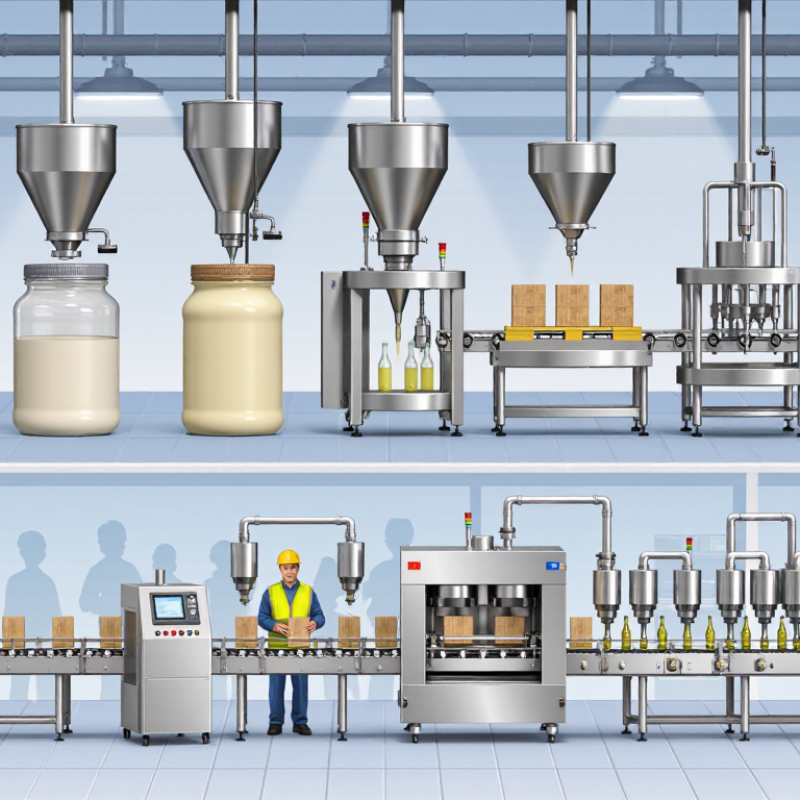
Industrial filling machines turn measured product into repeatable packages. Volumetric systems suit consistent liquids, while piston fillers handle thicker creams and pastes. Flow-meter fillers track liquid movement without relying only on container size. Load-cell systems weigh each dose, which can help when product density varies. Nozzle design matters too. Fit matters. A diving nozzle can reduce splashing in foamy products, while shutoff valves limit drips at the end of a fill.
The right setup depends on product behavior, container shape, and target speed. Beverage lines often prioritize fast, steady flow. Personal-care production may need gentle handling for lotions and gels. In chemical processing, compatible wetted parts and controlled dispensing help protect product quality and equipment. Sensors and programmable controls can flag missed containers or inconsistent fills, but they still need calibration and routine cleaning. A clever line can still drift.
Tips: Test with the real product, not water alone. Record fill weight, nozzle height, and line speed. Check changeover time and cleaning access before choosing. Test it. Small leaks are easy to miss.
When comparing global filling machine manufacturers, assess proven output under your actual product conditions. Request trial data for viscosity, foaming, container shape, and target fill volume. A brochure speed is not your line speed. Ask for measured accuracy, reject rates, and changeover time using comparable containers. PMMI’s 2024 State of the Industry report estimates U.S. packaging machinery shipments at about $10.9 billion in 2023, underscoring a substantial, competitive equipment market. Price alone tells little.
Inspect hygienic design, guarding, controls, and documentation against your site’s requirements. Ask how the supplier validates cleanability and protects filling accuracy during long production runs. The International Federation of Robotics’ World Robotics 2024 report recorded 541,302 industrial robot installations worldwide in 2023. That broader automation trend makes interface capability and technician training practical evaluation points, not extras. Request a factory acceptance test, spare-parts lead times, and service response commitments in writing. Numbers help. Fit matters more. A good scorecard still misses things: operators may find a changeover awkward only after weeks on shift. Include their feedback before choosing.
An overview of ten leading industrial filling machine manufacturers shows a market shaped by product type, output speed, and line complexity. Some suppliers focus on liquids, while others build systems for powders, creams, or thick pastes. A machine suited to a clear liquid may struggle with a product that foams or changes consistency. The details matter.
Experienced manufacturers typically offer several filling methods, such as gravity, piston, and flow-meter systems. Each handles product behavior differently. Buyers should compare stated accuracy with results from trials using their actual containers and materials. Ask how quickly operators can clean the machine, switch formats, and access replacement parts. Small delays add up.
Controls and line integration deserve equal attention. A filler must work smoothly with upstream feeding and downstream capping or labeling equipment. Strong technical support can matter as much as headline speed. Not glamorous, but important. A tidy comparison table may still miss real production conditions; that is an imperfect part of evaluating suppliers. Request practical demonstrations, clear maintenance schedules, and references from facilities with similar products before making a decision.
An anonymized overview of established manufacturers and their publicly documented areas of activity. Profiles are editorial examples, not a verified market-share ranking; product ranges vary by model and market.
| Profile | Home base | Typical filling focus | Common products and containers | Line and automation scope |
|---|---|---|---|---|
| 01 · Beverage line specialist | Germany | High-speed beverage filling and bottling | Carbonated and still drinks; PET and glass bottles, plus cans in some line configurations | Filling, capping or seaming, labeling, inspection, and integrated line engineering |
| 02 · Beverage packaging specialist | France | Bottling and packaging systems for liquid foods and beverages | Water, soft drinks, and other beverages; PET, glass, and selected can applications | Standalone fillers through complete packaging lines, with options for container handling and line integration |
| 03 · Process and filling systems provider | Germany | Filling equipment linked to hygienic process systems | Food, dairy, and beverage products; container and packaging formats depend on the application | Process equipment, filling, and related automation for production environments |
| 04 · Pharmaceutical packaging machinery maker | Italy | Accurate filling and dosing for regulated production | Pharmaceutical liquids and other dosage forms; vials, bottles, and related containers | Filling, closing, and packaging systems; configuration depends on product and cleanroom requirements |
| 05 · Pharmaceutical process and filling specialist | Germany | Liquid pharmaceutical processing and filling | Sterile and non-sterile liquid products; vials, syringes, cartridges, or bottles depending on the system | Process, filling, and packaging equipment designed for controlled pharmaceutical production |
| 06 · Multi-sector packaging machinery group | Italy | Automated filling and packaging for selected consumer-product sectors | Food, personal-care, and other packaged products; formats vary across operating divisions | Packaging machinery, automation, and line-level integration through specialized divisions |
| 07 · Broad-based packaging equipment supplier | United States | Liquid filling across a range of production scales | Food, beverage, household, and personal-care liquids; bottles and other rigid containers | Filling equipment and complementary packaging machinery supplied through a portfolio of specialists |
| 08 · Packaging systems and integration group | United States | Filling and packaging solutions for multiple industries | Food, beverage, pharmaceutical, and consumer products; equipment is application-specific | Individual machines, integrated packaging lines, and production support services |
| 09 · Liquid filling specialist | France | Volumetric filling and packaging for liquid products | Food, dairy, cosmetics, and chemical liquids; bottles and selected cup formats | Filling and closing systems, with options selected for product properties and container type |
| 10 · Industrial liquid-filling equipment maker | United States | Filling machinery for liquid products, from semi-automatic to automated setups | Liquids for food, cosmetics, chemicals, and household products; commonly bottles and containers | Equipment options may include piston, overflow, gravity, or pump-based filling, depending on the product |
Industrial filling machine manufacturers differ less by headline speed than by the products they handle. Some specialize in compact piston fillers for sauces, creams, and other viscous goods. Others build gravity or flow-meter systems for water, oils, and household liquids. Powder-focused suppliers design auger fillers that control dust and portion consistency. Small details matter: a nozzle that cuts off cleanly can reduce drips around a bottle neck.
Markets shape each manufacturer’s product range. Beverage producers often need high-throughput lines, integrated rinsing, and rapid changeovers. Personal-care and chemical plants may prioritize accurate dosing, corrosion-resistant contact parts, and flexible container handling. Pharmaceutical applications call for documented controls and repeatable filling performance. Not every supplier serves every sector. A broad catalog can look impressive, yet local service and spare-part access may matter more during a stoppage.
Specialization also appears in line scale. One manufacturer may suit a growing workshop with a semi-automatic bench unit; another may focus on robotic systems linked to capping and labeling equipment. Ask for tested output using the actual product, container, and closure. Viscosity changes with temperature. Foam can distort fill levels. A demonstration with water alone may not reveal much. Rankings are useful, but a tidy top-ten list can hide these practical differences. The comparison is imperfect. Modest uncertainty is healthier than a confident claim unsupported by production trials.
Industrial filling machine manufacturers differ in more than advertised output speed. A useful comparison looks at accuracy, changeover time, cleaning access, and support after installation. On a liquid line, even a small fill variation can create rejected containers or frequent adjustments. Ask how equipment performs with your actual product, container shape, and production schedule. Details matter. A machine that runs quickly in a demonstration may behave differently during a long shift with frequent format changes.
Global reach matters when parts or service are needed. Check whether technicians can respond locally, whether spare components are stocked nearby, and whether remote troubleshooting is practical. These details can reduce downtime, but service coverage on a map does not guarantee a fast repair. That comparison is not always tidy. Manufacturers also vary in how easily their systems connect with conveyors, cappers, and inspection equipment.
Industry trends include more automated controls, recipe storage, and data monitoring. These features can help teams track output and spot recurring stoppages. They also add complexity, and smaller facilities may not use every function. Sustainability goals are influencing designs too, with attention to reducing product loss, rinse water, and energy use. Still, reported efficiency depends on operating conditions. Buyers should request clear test criteria and consider a production trial before treating headline figures as reliable.
Contact
KYOCERA SGS Precision Tools, Inc.
(330) 686-5700
150 Marc Drive
Cuyahoga Falls, OH 44223
Products
Resources