China Top 10 Wire Winder Manufacturers for Global Buyers
Choosing the right Wire Winder manufacturer can influence production speed, winding accuracy, and long-term equipment costs. Global buyers often compare suppliers across automation, wire diameter range, output stability, and service capacity. These factors matter on a factory floor, where uneven tension can create loose coils, damaged insulation, or repeated stoppages.
This introduction presents China’s top 10 Wire Winder manufacturers for international buyers. The selection focuses on practical capabilities, including machine design, customization, quality control, export experience, and after-sales support. A reliable manufacturer should explain spindle speed, winding pitch, bobbin dimensions, control systems, and applicable wire materials clearly. Factory visits, sample testing, and technical discussions can reveal more than polished brochures.
Details matter.
Buyers should also examine certifications, production records, spare-parts availability, and response times. A supplier may offer an attractive price but provide limited engineering support after delivery. Another may charge more while reducing setup problems through better documentation and training. The best choice depends on production volume, target markets, labor conditions, and future expansion plans.
No ranking can fit every buyer. Manufacturer information may change, and some claims require independent verification. Request current specifications, test videos, reference projects, and written warranty terms before making a commitment. This guide is a starting point, not a substitute for technical due diligence. It aims to help procurement teams compare Chinese manufacturers with greater confidence, clearer questions, and fewer costly assumptions.
What Is a Wire Winder and Why Choose Chinese Manufacturers?
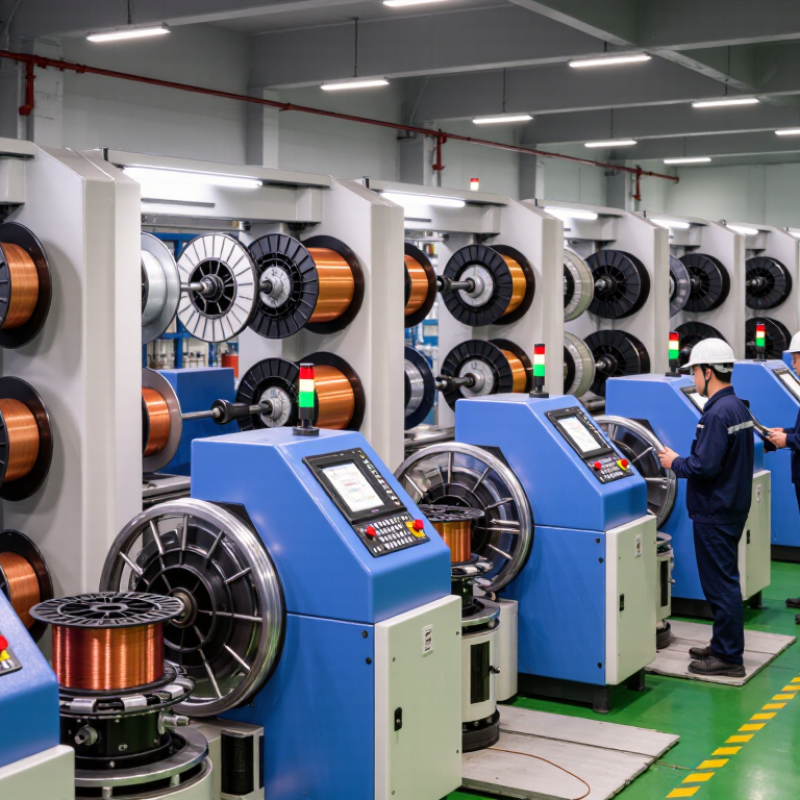
A wire winder is a machine that places wire neatly onto a spool, reel, or coil. It controls rotation, winding tension, traverse movement, and finished coil shape. In daily production, these details matter. Uneven layers can cause tangling, insulation damage, or poor feeding during installation.
Chinese manufacturers attract global buyers through flexible engineering, competitive production costs, and broad equipment experience. Many factories can adapt winding speed, spool dimensions, wire diameter, and control systems to specific applications. Buyers may also request trial samples, factory acceptance tests, inspection reports, and spare-part lists. This practical process supports more reliable purchasing decisions. However, not every supplier offers the same accuracy. A low quotation may hide limited testing, weak documentation, or slow technical support. I have seen specifications look complete, yet the actual tension control needed further adjustment.
Tips: Ask for sample winding videos and measurable performance data. Confirm maximum wire diameter, speed range, tension accuracy, compatible spool sizes, and power requirements. Request clear drawings before production. Check how the supplier handles calibration, training, warranty service, and replacement parts. Keep communication written and specific. Small details prevent expensive surprises. A careful buyer should also compare finished coil quality, not only machine appearance or price.
How to Evaluate China’s Top Wire Winder Manufacturers
China Top 10 Wire Winder Manufacturers for Global Buyers
Evaluating China’s top wire winder manufacturers requires more than comparing catalog prices. Ask how each supplier controls wire tension, winding pitch, spindle speed, and traverse accuracy. During a factory assessment, request a live trial using your actual wire diameter and insulation type. Watch the winding surface closely. Uneven layers, loose edges, or sudden tension changes reveal more than polished brochures.
A capable manufacturer should provide machine drawings, electrical specifications, calibration records, and clear production tolerances. Check whether the winder supports your target coil dimensions and production speed without excessive vibration. Ask for sample data from continuous operation, not only a short demonstration. Service quality also matters. Confirm response times, spare-part availability, remote diagnosis, and technician training. A detailed acceptance test can reduce disputes after delivery.
Do not rely on impressive claims alone. Request references from buyers with similar wire materials and output requirements. Review safety documentation and export compliance before signing a contract. An honest supplier should explain limitations, maintenance intervals, and known failure points. That matters. I have found that small details, such as unstable air pressure or poor cable routing, can affect winding quality over time. Factory visits are useful, but they are not perfect evidence. Repeat testing, independent inspection, and written performance criteria create a more reliable decision.
This neutral buyer-side evaluation model assigns a 100-point weighted score to the factors most relevant when comparing wire winder manufacturers: machine performance, product quality, customization, reliability, compliance, service, and total cost of ownership. Buyers can adjust the weightings to match their production requirements.
Profiles of the Top 10 Chinese Wire Winder Manufacturers
China Top 10 Wire Winder Manufacturers for Global Buyers
The profiles of China’s top ten wire winder manufacturers reveal different technical strengths. Some focus on precision motor coils, while others build equipment for transformers, cables, and electromagnetic components. Several manufacturers support thin enamelled wire below 0.1 millimetres. Others handle heavier copper wire for industrial coils. Their machines commonly include programmable tension control, adjustable traverses, and servo-driven spindles.
A serious profile should examine more than catalogue photos. Buyers should review factory experience, winding samples, control-system details, and export documentation. Some Chinese manufacturers offer compact bench machines for laboratories and small workshops. Others design multi-spindle systems with automatic cutting, taping, or spool changing. Custom automation appears frequently, but its quality depends on engineering communication. A clear drawing often prevents expensive misunderstandings.
Not every supplier performs equally well.
The strongest manufacturers usually provide factory testing, spare-parts lists, training videos, and responsive technical support. Buyers should ask for winding trials using their actual wire, bobbin, and tension requirements. This exposes problems with wire crossing, uneven layers, or unstable speed. A few suppliers may promise broad compatibility without enough evidence. That deserves careful questioning. Reliable profiles also mention limitations, maintenance access, delivery conditions, and operator skill requirements. Experience shows that a lower purchase price can become costly when software changes, replacement sensors, or commissioning support are unclear.
Key Differences in Technology, Capacity, and Customization
China Top 10 Wire Winder Manufacturers for Global Buyers
The leading Chinese wire winder manufacturers differ sharply in technology, capacity, and customization. Some factories build high-speed machines for automotive coils, while others focus on small-batch transformer or motor winding. The IEA’s Global Critical Minerals Outlook 2024 reports that global copper demand may rise from about 26 million tonnes in 2023 to 31 million tonnes by 2035. This pressure makes stable tension control, accurate layering, and reduced material waste increasingly valuable.
Technology is not limited to winding speed. Advanced suppliers combine servo motors, automatic wire feeding, programmable recipes, and vision inspection. A practical benchmark is repeatability, not brochure speed. Manufacturers with large production bases usually offer wider frame sizes, heavier pay-off systems, and stronger after-sales teams. Yet capacity figures can mislead. A factory may list 500 machines annually but lack experience with unusual wire profiles or multi-spindle layouts.
Customization separates capable suppliers from simple assemblers. Global buyers should request trial winding, sample coils, torque records, and cycle-time evidence. According to MarketsandMarkets, automation remains a major driver in the global wire and cable equipment sector, especially where labor costs and quality requirements are rising. Still, fully automated systems are not always better. They can increase maintenance demands and training time. A thoughtful supplier explains those limitations, provides spare-part data, and adapts software to the buyer’s production process instead of forcing a standard design.
How Global Buyers Can Select the Right Wire Winder Supplier
Choosing among the top wire winder manufacturers requires more than comparing prices and machine photos. Global buyers should match the supplier’s equipment with their actual wire diameter, spool size, winding speed, and production volume. Ask for measured tension accuracy, traverse control, changeover time, and failure rates. These details reveal engineering ability better than polished brochures.
Request a sample winding test using your own wire. Inspect layer alignment, edge control, surface damage, and final coil stability. A reliable supplier should provide test data, inspection records, operating manuals, and clear component specifications. Check whether the manufacturer can support your voltage requirements and documentation standards. Factory videos help, but a live remote audit is stronger. An in-person visit is better still.
Communication quality also matters. Confirm response times, spare-part availability, training, warranty terms, and technical support after installation. Ask who will solve problems during commissioning. The cheapest offer can become expensive when technicians wait weeks for answers. However, premium pricing does not guarantee perfect performance. No checklist is perfect. I would leave room for trial orders, because supplier promises and factory reality can differ. Evaluate production consistency, not one impressive machine. A capable wire winder partner explains limitations honestly, records changes carefully, and improves the design when your process exposes a weakness.

