
Home Energy Storage Battery demand is rising as households seek greater control over electricity costs, backup power, and rooftop solar. The International Energy Agency’s Batteries and Secure Energy Transitions report records 42 gigawatts of battery storage additions worldwide in 2023, a 130% increase from 2022. That growth makes manufacturer choice more consequential. A battery sits quietly in a garage or utility room, yet its chemistry, inverter compatibility, warranty, and service network shape years of daily use.
China is a major hub for battery manufacturing, and its suppliers vary widely in scale, product design, and export experience. IEA Executive Director Fatih Birol has called batteries “a key technology for the clean energy transition.” That observation applies directly to home storage, where dependable systems help households use solar power after sunset and maintain essential loads during outages. Still, a top-ten list cannot tell the whole story. Nameplate capacity alone may obscure usable energy, safety testing, software support, or long-term warranty conditions. Buyers should compare those details, not just price.
This guide introduces ten Chinese Home Energy Storage Battery manufacturers and the capabilities that distinguish them. It is intended as a starting point, not a substitute for product-level checks. Market leadership can shift quickly, and published specifications do not always reflect performance in every home. A careful comparison should include certifications, installation requirements, local after-sales support, and independently verifiable product data.
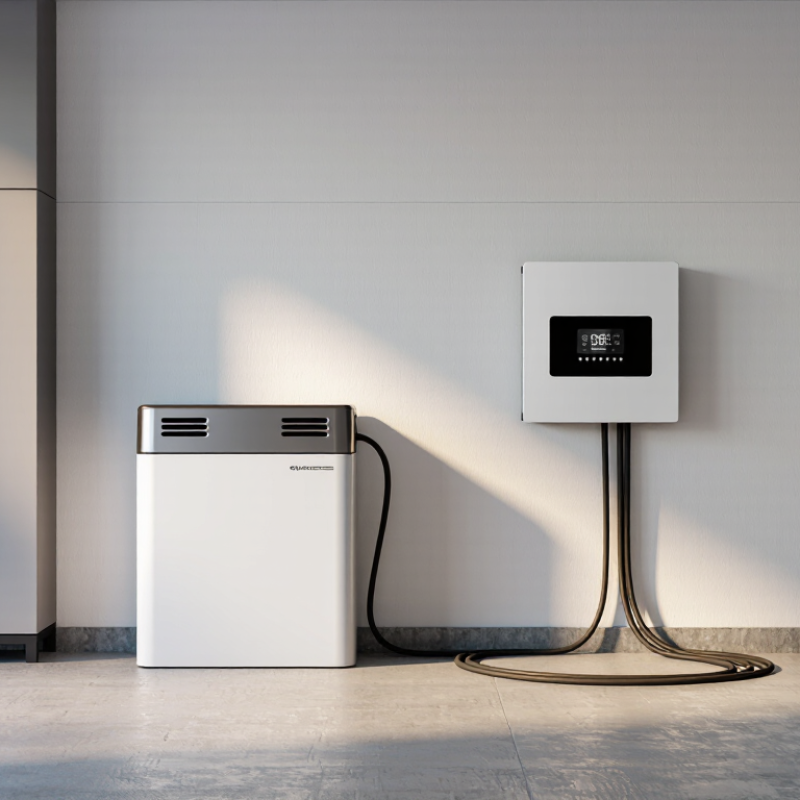
A home energy storage battery stores electricity for use when solar panels produce little power, or when household demand rises. It usually combines battery cells, a battery management system, and an inverter. The inverter converts stored direct current into alternating current for household appliances. Some systems can also charge from the grid, depending on their configuration.
During sunny hours, excess solar electricity can charge the battery. At night, the system discharges power to lights, refrigerators, or other selected loads. The battery management system monitors temperature, voltage, and charge levels to support safe operation and longer service life. According to the International Energy Agency’s Batteries and Secure Energy Transitions report (2024), annual battery storage additions in the power sector more than doubled in 2023, reaching about 42 GW. That figure describes storage across the power sector, not home batteries alone. Not magic. Conversion losses and household load patterns affect how much energy is actually available.
Tips: List essential appliances and their wattage before choosing capacity. A sizing estimate can still miss real evening habits; measure usage for a few days, then review the plan with a qualified installer.

China’s residential energy storage battery industry brings together cell production, battery-pack engineering, inverter integration, and household installation. Manufacturers design systems for homes with rooftop solar, time-based electricity rates, or backup needs. A typical setup pairs a wall-mounted battery with a hybrid inverter and monitoring software. Capacity should match actual use, not just a sales estimate. That matters at home. Evening cooking, heating, and electric-vehicle charging can create very different demand patterns. Product labels alone may not reveal how much usable energy remains after reserve settings and conversion losses.
Buyers can compare usable capacity, continuous output, cycle-life test conditions, warranty coverage, and local service arrangements. Battery chemistry affects safety, lifespan, and performance across operating temperatures. Installers also need to check electrical compatibility, ventilation, mounting space, and household load requirements. Not every system fits. A practical weakness in many buying guides is the focus on battery price while overlooking installation quality and after-sales support. Export-oriented supply chains can offer broad model choices, but availability and service vary by region. Ask for documented test data and a clear warranty process. A careful comparison starts with household consumption records and a realistic backup plan, rather than a headline capacity figure.
Residential energy storage systems commonly use lithium iron phosphate (LFP) or nickel manganese cobalt (NMC) batteries. LFP cells typically offer a longer cycle life, while actual performance varies with product design, operating conditions, and testing standards. These chemistry-level ranges do not represent individual manufacturers.
A useful comparison of China’s leading home energy storage battery manufacturers starts with evidence, not rankings alone. Check whether published capacity means nominal or usable energy. A 10 kWh label may not represent the energy available to a household. Review cell chemistry, inverter compatibility, charge and discharge limits, and battery management safeguards. Ask for test reports and certifications relevant to the destination market. Details matter.
Manufacturing consistency is as important as a strong specification sheet. Look for documented quality checks, traceable components, and clear procedures for handling defects. Warranty terms should state the coverage period, throughput limits, and exclusions in plain language. Compare service response times and spare-parts availability, especially for systems installed far from major service centers. Independent audits can add confidence, though they do not guarantee every unit will perform identically. That part is easy to overlook.
Tips: Request a sample datasheet, warranty, and test report before shortlisting. Ask how usable capacity changes with temperature and age. If answers stay vague, pause and verify them with an independent technical reviewer.
Suggested evaluation framework. The weights and screening benchmarks below are assessment guidelines, not verified ratings of specific manufacturers.
| Evaluation Criterion | Suggested Weight | Evidence to Review | Practical Screening Considerations |
|---|---|---|---|
| Safety and product compliance | 18% | Current certificates and test reports for the specific battery model; transport test documentation; applicable market approvals. | Check applicability of standards such as IEC 62619, IEC 63056, and UN 38.3 against the product, intended use, and destination market. Verify report scope and issuing laboratory. |
| Cycle life and performance transparency | 14% | Datasheets and test reports stating cycle count, remaining capacity, depth of discharge, temperature, charge/discharge rate, and test method. | Compare cycle-life claims only when test conditions are comparable; distinguish tested results from projections and marketing estimates. |
| Usable capacity and power rating | 10% | Rated and usable energy, continuous and peak power, operating limits, and system-level efficiency documentation. | Confirm whether quoted capacity is nominal or usable and whether power figures apply to the battery alone or the complete system. |
| Battery management and protection | 10% | BMS protection functions, monitoring and fault records, temperature limits, balancing method, and emergency response documentation. | Review protections for overvoltage, undervoltage, overcurrent, and temperature, as well as system-level safeguards and update procedures. |
| Inverter and system compatibility | 10% | Validated compatibility list, communication protocol documentation, installation instructions, and commissioning support details. | Confirm compatibility with the intended inverter, system voltage, firmware, and local electrical requirements before purchase. |
| Warranty clarity and service support | 10% | Written warranty terms, throughput or cycle limits, capacity-retention conditions, exclusions, claim process, and service contacts. | Assess the full warranty conditions, including installation requirements, operating limits, response process, and who is responsible for service in the destination market. |
| Manufacturing quality controls | 9% | Quality-management documentation, traceability records, incoming and outgoing inspection procedures, and audit findings where available. | Look for documented controls across production and traceability; verify certificates are current and cover the relevant site and activities. |
| Supply capability and delivery reliability | 7% | Production and lead-time statements, order references, shipment records, and documented contingency planning. | Validate capacity and lead-time claims against the proposed order volume and delivery schedule rather than relying on headline figures alone. |
| Environmental and end-of-life information | 6% | Material and environmental disclosures, safe handling guidance, and take-back or recycling information where applicable. | Check documentation against the regulations and recycling arrangements relevant to the installation market. |
| Commercial and financial reliability | 6% | Business registration, contract terms, product liability coverage where applicable, and verifiable references. | Review the contracting entity, payment protections, delivery obligations, and ability to support warranty commitments over time. |
| Total | 100% | Use a consistent scoring scale and compare equivalent products, documentation, and operating conditions. | |
A useful profile of China’s ten leading home energy storage battery manufacturers should look beyond production scale. It should examine how each company designs systems for everyday homes: wall-mounted battery units, hybrid inverters, backup circuits, and monitoring software. Product details matter. Look for usable capacity, power output, cycle-life test conditions, operating temperature, and warranty terms. A large capacity figure alone says little about performance during a winter outage.
Manufacturers differ in cell sourcing, system integration, quality controls, and service support. Some focus on compact batteries for apartments; others build modular systems that can expand as household demand grows. Installation guidance and access to replacement parts also deserve attention. Ask how safety tests were conducted, and whether the stated results apply to the complete system or only individual cells. A datasheet is only a starting point. Real-world performance can depend on wiring, inverter compatibility, and local climate. Comparisons are imperfect, too; published figures may use different test methods. A careful profile should state what is known, flag what is unclear, and avoid treating marketing claims as independent verification.
Comparing home energy storage batteries means looking beyond advertised capacity. Check usable kilowatt-hours, continuous output, and round-trip efficiency against your evening loads. The IEA’s Batteries and Secure Energy Transitions report recorded about 42 GW of battery storage additions in the power sector in 2023, more than double the previous year. That signals rapid market growth, not guaranteed household performance. A solar home may value daytime charging and backup power differently from a home facing frequent outages.
Compare manufacturers using the same test conditions. Ask for cycle-life data, retained capacity at the stated cycle count, and warranty limits on energy throughput. Check whether the battery’s inverter communication protocol matches your existing system. Cell chemistry matters, but so do enclosure design, temperature control, and clear safety documentation. Look for independent test reports, not just product brochures.
Numbers need context. A long cycle-life claim can depend on shallow daily cycling and moderate temperatures; real homes are less tidy.
Request written service response times, replacement procedures, and local support arrangements before comparing prices. I would also ask how usable capacity changes after several years, because brochures rarely make degradation feel concrete.
Contact
KYOCERA SGS Precision Tools, Inc.
(330) 686-5700
150 Marc Drive
Cuyahoga Falls, OH 44223
Products
Resources