7 Courier Bag Buying Tips for Global Buyers
A Courier Bag can look simple on a sample table: a flat mailer, a sealed edge, and a printed label. Its real test comes later, when rain hits the route, parcels are stacked, and staff need to seal orders quickly. Global buyers must judge more than price. Material strength, closure quality, dimensions, print consistency, and supplier reliability all affect performance.
The scale is substantial. Pitney Bowes’ 2024 Parcel Shipping Index reports that global parcel volume reached 161 billion shipments in 2023, a 6% increase from the previous year. That figure does not predict demand for any one buyer, but it shows why small packaging failures can repeat at scale. A weak seam across a large order is not a small problem.
Good choices start with evidence. Ask suppliers for material specifications, sample bags, and test results that match your shipping conditions. Check whether the bag fits the product without excessive empty space. Compare samples after handling, not only before shipment. A neat sample is not proof of dependable production.
Product-design pioneer Dieter Rams said, “Good design is as little design as possible.” Rams was not a Courier Bag specialist, so this is a design principle, not a packaging test. Still, it offers a useful reminder: avoid features that add cost without solving a real shipping problem. Some decisions remain imperfect. A lighter bag may reduce material use, yet provide less protection for certain goods. The tips ahead help global buyers weigh those trade-offs with clearer questions and practical checks.
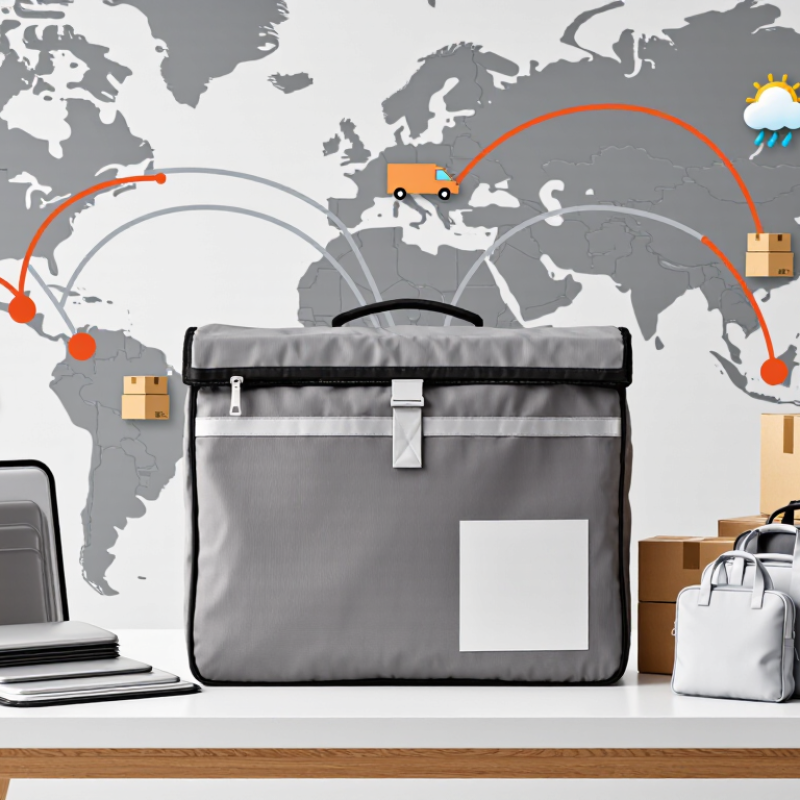
Identify the Courier Bag’s Intended Use and Delivery Conditions
Start by defining what the bag will carry and how it will travel. A small document pouch faces different demands from a bag holding several soft parcels. List typical parcel dimensions, expected weight, and delivery frequency before comparing materials.
That changes everything.
For bicycle routes, look for a close-fitting shape, reflective panels, and seams that resist repeated flexing. For van-based rounds, wide openings and reinforced handles may matter more. Short route notes help. If deliveries happen in rain or snow, check flap overlap, zipper protection, and fabric coating; no bag stays dry if water enters through an open top.
Consider the handoff, too. A courier may need one-handed access while holding a scanner, so test the closure with gloves on. For temperature-sensitive shipments, insulation and washable lining could be relevant, but verify the required holding time rather than assuming thick padding is enough.
If bags return for reuse, choose surfaces that clean easily and inspect stitching after a realistic load test. A sample loaded with actual parcels reveals awkward balance fast. It is easy to over-specify durability and overlook staff comfort.
There is no perfect specification. Record the route’s longest outdoor interval and average parcel weight during sample evaluation.
Choose Durable Materials, Closures, and Construction
A courier bag can look sturdy online, but loaded seams reveal more. Compare fabric weight, weave density, and coating instead of trusting a “heavy-duty” label. Woven polyester or nylon may resist abrasion, yet thicker fabric is not always stronger. A coating can crack after repeated folding. Small check. Request a sample and bend it several times. Rub a damp cloth over an inconspicuous area to check for color transfer. Inspect corners and strap anchors, where a full bag puts the most strain. Stitching should be even, without loose loops or skipped sections.
Test closures with the bag packed to its expected load. A zipper should move smoothly around a full compartment, without catching on the lining. Flaps can shield openings from light rain, but they may slow frequent access. Hook-and-loop closures are quick, though dust and lint can reduce their grip. Not always obvious. For wet routes, ask how seams are finished and whether the supplier can provide test details. I would not treat one sample as proof of lasting performance; results can vary between production batches. That uncertainty deserves a question before ordering.
Match Bag Size and Organization to Typical Shipments
Courier bags should match the parcels your team actually sends, not one assumed “standard” order. The 2023 Parcel Shipping Index estimates that 161 billion parcels moved worldwide in 2022. It projects 256 billion by 2027. Higher volumes make consistent packing more useful, but they do not mean every shipment needs a larger bag.
Review a typical week of orders and group them by packed dimensions, weight, and contents. Measure each item after adding protective padding, and allow room for the closure flap. Use a few practical size bands rather than a separate bag for every product. Small items shift. For mixed orders, look for a secure document pocket or simple internal divider, but check that added structure does not waste space or slow packing. A loose fit can let goods slide; an overly tight fit can strain seams and closures.
Match organization to the route through your operation. If staff sort by destination or delivery priority, clear label space and easy-to-scan surfaces may matter more than multiple compartments. Test candidate sizes with real orders, including awkward shapes and multi-item shipments. Record damaged closures, excess void space, and packing time. The first size chart will not be perfect; revise it when the shipment mix changes. Use the report’s growth forecast as context, not as a reason to buy oversized bags.
Check Supplier Quality, Compliance, and Customization Options
A courier bag should survive more than a showroom inspection. Ask suppliers for a production sample, then check the seams, zipper movement, handle stitching, and lining by hand. Small details matter. Request fabric specifications and documented test results, such as abrasion resistance or load testing, where relevant. A polished sample is not the whole story; production batches can vary.
Check whether the supplier can provide clear material declarations and testing records for the markets where you plan to sell. Requirements differ by destination and product design, so confirm details with a qualified compliance professional. Ask who conducts the tests, when they were completed, and whether the records match the exact fabric and coating you intend to order.
Ask for proof. Vague assurances are not enough.
Customization needs the same scrutiny as construction. Confirm print placement, color tolerance, pocket dimensions, and reflective-panel options with a marked-up drawing. Request a pre-production sample before approving a large order. Changes can affect weight, cost, and delivery time. I would also clarify how defects are recorded and corrected; this step is easy to overlook, and supplier replies may not be perfectly specific. Get the agreed details in writing.
Compare Landed Costs, Samples, and International Order Terms
A low unit price can be misleading when a courier bag crosses borders. Compare the landed cost per usable bag, not just the factory quote. Add freight, insurance, customs charges, destination handling, and currency conversion. Ask suppliers to state which charges are included and which are estimates. Small differences add up. Request quotes using the same quantity, delivery location, and shipping method so the comparison is meaningful.
Order samples before approving production. Check the fabric thickness, zipper movement, seam strength, handle comfort, and print alignment under ordinary lighting. Pack a sample with the weight and shape it will actually carry. Take photos and record measurements; memory is a poor quality-control tool. Confirm whether bulk production will match the approved sample, and agree how noticeable defects will be handled. Samples can be excellent while a rushed production run varies. That possibility deserves attention.
Read international order terms line by line. Confirm who arranges transport, pays freight and insurance, handles import clearance, and bears risk at each stage. If an Incoterm is named, verify its version and exact delivery point with your freight provider. Also document lead time, minimum order quantity, payment schedule, packaging, and remedies for shortages. Keep the evidence. A spreadsheet can look exact and still omit local handling fees, so leave room for an estimate to change.
Courier Bag Buying: Illustrative Landed Cost per Bag
A sample cost breakdown helps global buyers compare more than just the quoted unit price.
Illustrative example only: assumed costs for a hypothetical order are $0.40 product cost, $0.07 freight, $0.02 estimated duty, and $0.01 packaging per bag, totaling $0.50. Actual landed costs vary by destination, customs classification, shipping method, order quantity, and supplier terms. Request samples and confirm all charges before ordering.

