How to Choose the Best PTFE Fuel Hose in 2026
Choosing the best Ptfe Fuel Hose in 2026 starts with the system it must serve, not the product label. Fuel type, operating pressure, temperature range, and available space all affect the right choice. A hose that fits neatly on a workbench may kink near a tight engine-bay bend. Small details matter. Check the manufacturer’s specifications, including pressure ratings, temperature limits, and fuel-compatibility information, before comparing options.
Look closely at the construction. A PTFE inner liner can offer broad chemical resistance, while an outer braid may help protect against abrasion and external wear. But the braid alone does not determine suitability. Fittings must match the hose design and size, and installation should respect the specified bend radius. Measure twice. Routing past hot surfaces or sharp edges can shorten service life, even when the hose itself is well made. Use clear product documentation, and seek qualified advice when specifications are unclear.
This guide explains how to compare hose materials, sizes, fittings, and ratings for a particular application. It also considers installation access, inspection, and long-term maintenance. There is no perfect hose for every setup. Trade-offs remain: a compact route may be easier to package, but harder to inspect later. That is worth thinking through. A careful selection process cannot replace professional installation or the supplier’s technical guidance, yet it can help you ask better questions before buying.
What Is a PTFE Fuel Hose and How Is It Constructed?
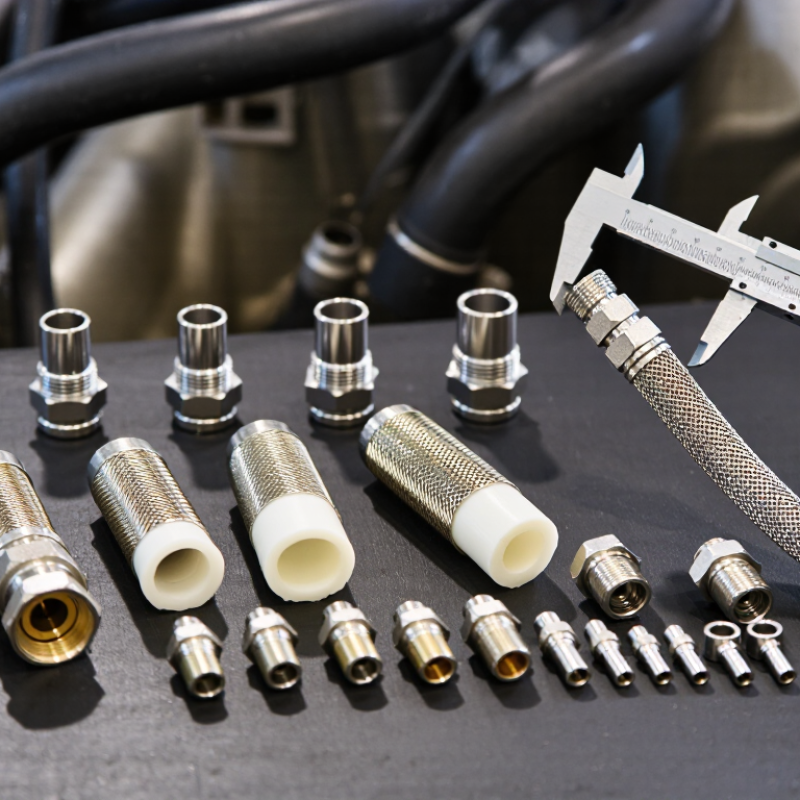
A PTFE fuel hose uses a smooth polytetrafluoroethylene tube to carry fuel, with reinforcement and protective layers around it. The inner tube resists many fuels and limits friction along the bore. Some designs use a conductive liner to help dissipate static charge. Check the hose specification; PTFE alone does not guarantee conductivity.
A common construction adds braided stainless-steel wire over the liner to resist pressure and reduce expansion. An outer cover may shield the braid from abrasion and moisture. Crimped fittings seal the hose ends, but incorrect fitting selection can cause leaks. Details matter.
NIST’s Chemistry WebBook gives PTFE a melting point of about 327°C; that is not its safe working temperature. Temperature, pressure, fuel type, and bend radius must all match the manufacturer’s limits.
SAE J30 provides recognized fuel-hose performance requirements, but it does not replace checking that a specific hose assembly is approved for the intended application. I would not judge a hose by its steel braid alone. Construction quality and the liner’s compatibility matter just as much.
Which Fuel and Operating Conditions Must the Hose Withstand?
Before selecting a PTFE fuel hose, identify the exact fuel it will carry. Gasoline, ethanol blends, diesel, and alternative fuel mixtures can affect hose materials and fittings differently. PTFE resists many chemicals, but the complete assembly includes more than its inner liner. Check compatibility for the liner, reinforcement, seals, and end connections. Do not assume “PTFE” means every component suits every fuel.
Map the hose’s real operating conditions, not just the engine’s normal readings. Include maximum pressure, pressure pulses, temperature near exhaust parts, and cold starts. If the line may experience vacuum, confirm that the hose is rated for it; pressure ratings alone do not answer that question. Leave room for movement and avoid tight bends. Small details matter.
Routing can make a sound hose fail early. Check for rubbing against brackets, sharp edges, and heat trapped behind shields. Measure the installed length and bend radius, then compare them with the assembly specifications. A common planning mistake is treating a short test run as proof of long-term suitability. It is not. Keep the hose’s rating and fuel details with the vehicle’s service records, and inspect the line periodically for damage or loose connections.
How Do Hose Linings, Reinforcement, and Fittings Differ?
PTFE fuel hose selection depends on the complete assembly, not just the liner. A smooth-bore liner supports steady flow and is easier to clean; a convoluted liner bends more readily but can trap residue. ASTM D4894 reports PTFE resin specific gravity around 2.13–2.19. That figure describes resin, not finished-hose pressure or fuel compatibility. Reinforcement changes those limits: stainless-steel braid resists pressure and abrasion, while additional outer protection can help where the hose rubs against brackets. SAE J30 provides fuel-hose performance test frameworks, but its requirements vary by hose type. Check documented temperature, pressure, and permeation ratings for the exact assembly.
Fittings matter just as much. A correctly matched end fitting must grip the liner and reinforcement without crushing or exposing the tube. Inspect the cut end for loose braid, uneven edges, or liner damage before assembly. Small details count. One easy mistake is choosing a fitting by thread alone; verify the sealing face, hose size, and assembly method. Supplier test records and traceable specifications are more useful than a generic “fuel safe” claim.
Tips: Match the bend radius to the routing; avoid tight turns near fittings. Ask for pressure-test and fuel-compatibility data for the finished hose, not only the PTFE material. Recheck after installation. Real-world vibration can reveal problems that a clean bench test misses.
How to Choose the Best PTFE Fuel Hose in 2026
How do hose linings, reinforcement, and fittings differ?
These are typical PTFE material reference points, not fuel-hose assembly ratings. Choose the liner for fuel compatibility, reinforcement for the required pressure and flexibility, and fittings that match the hose and connection. The complete hose assembly’s rated limits take precedence.
How Can You Verify Safety Ratings and Compatibility?
A PTFE fuel hose is only as dependable as its documented rating and complete assembly. Check the manufacturer’s technical sheet for working pressure at the expected operating temperature. Do not rely on burst pressure alone; it describes a limit, not a safe continuous operating level. Look for clear identification of the applicable test standard, traceable product markings, and documentation for the exact hose and fittings. A rating printed on a hose liner may not cover the assembled line.
Tips: Match the hose to the precise fuel blend, including any ethanol content or additives. Confirm that the fitting seals are compatible too. Keep the data sheet and installation notes. Small details matter.
Compatibility also depends on the vehicle or equipment and the installation route. Check the manual’s pressure and temperature requirements, then compare them with the hose documentation. Inspect the planned path for hot surfaces, sharp edges, vibration, and bends tighter than the specified minimum radius. A hose can pass a pressure test and still wear through against a bracket. I have seen compatibility treated as a material question alone; that is an easy assumption to make, but it misses fittings and routing. If a rating or fuel specification is unclear, pause and ask the supplier for written confirmation before installation.
How Should You Compare Options for Your Vehicle or System?
Compare PTFE fuel hoses by the demands of your specific vehicle or system, not by appearance alone. Check the hose’s pressure and temperature ratings against the pump, engine, and operating conditions. Confirm that its liner is compatible with the fuel in use, including any additives. A rating that looks generous on paper may not cover every fitting or connection in the assembly. Small details matter.
Next, compare inner diameter, bend radius, and fitting type. A hose that kinks behind a tight engine bay can restrict flow, even when its stated capacity seems adequate. Measure the route, including clearance from hot surfaces and moving parts. Check whether the hose needs abrasion protection or a conductive liner for your application; follow the hose maker’s guidance and the system’s requirements. It is easy to focus too much on the braid. The liner and end connections deserve equal attention. Ask for clear specifications and installation instructions, then verify that the complete assembly—not just the hose—meets your needs. I would still leave room for careful rechecking after installation. That is not overcautious.