
Choosing a Playground Set for a business is more than picking bright colors or a popular theme. It means matching play value, site conditions, safety, and long-term upkeep. The need is real: the CDC’s 2023 Youth Risk Behavior Survey found that just 23.9% of U.S. high school students reported being physically active for at least 60 minutes every day. The World Health Organization recommends an average of 60 minutes of moderate-to-vigorous activity daily for children and adolescents. A thoughtfully planned play area can support active play, though no equipment alone guarantees healthier habits.
For a business, the practical questions are specific. How many children will use the equipment during a busy afternoon? Will toddlers and older children need separate zones? Does the site have room for fall zones, accessible routes, and suitable protective surfacing? The U.S. Consumer Product Safety Commission’s Public Playground Safety Handbook offers detailed guidance on equipment layout, surfacing, inspection, and maintenance. It is a useful reference, not a substitute for a site assessment by qualified professionals.
A lower purchase price can look attractive on a spreadsheet. It may not reflect installation, replacement parts, cleaning, or downtime. Look closely at materials, warranty terms, age recommendations, and the supplier’s maintenance guidance. Ask for drawings and clear specifications before committing. Small details matter: a shaded bench near the entrance, for example, can make supervision easier. Still, a perfect plan on paper may not fit the real site. Compare options against your actual space, users, and operating budget before choosing.
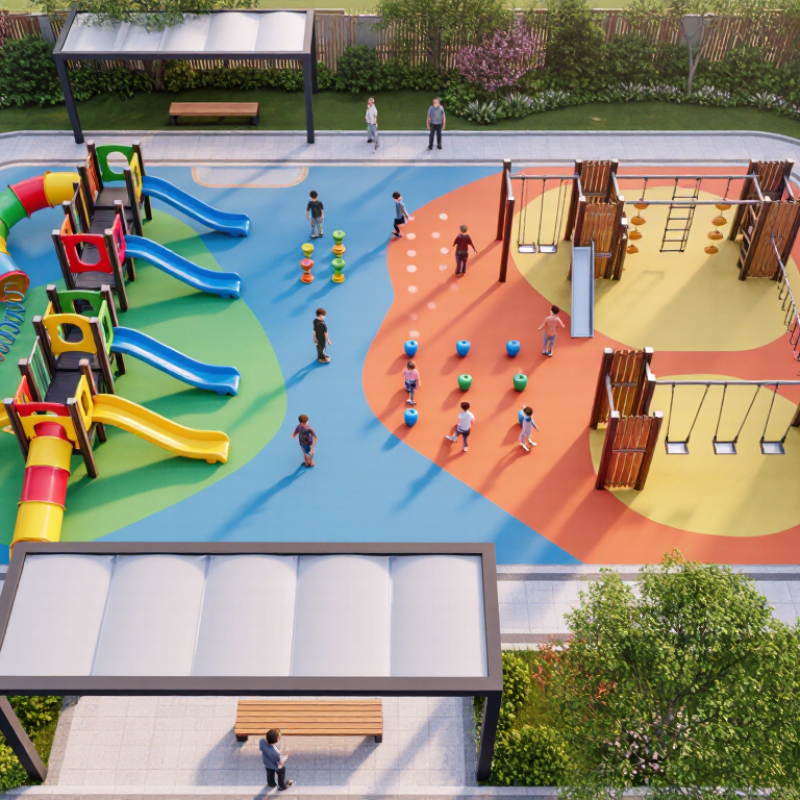
Before comparing playground sets, decide what the space must do for your business. A family café may want parents to stay longer, while a childcare center may need activities for several age groups. Define the likely users, their ages, group size, visit length, and supervision needs. Small details matter. Toddlers need reachable features and clear sightlines; older children may enjoy climbing challenges or cooperative games. Avoid designing for an imagined “average” child. That assumption can miss real needs.
Tips: Observe how visitors use your outdoor space. Ask staff and families what would make play easier or more engaging. Note busy hours, available space, shade, and the routes children take. A quick sketch can reveal awkward corners before you choose equipment.
Next, connect those observations to measurable business goals, such as encouraging repeat visits or offering a useful amenity to families. Set a realistic budget that includes installation, surfacing, inspections, and ongoing upkeep—not just the equipment price. Check site measurements and ask qualified suppliers for documentation on age ranges, materials, maintenance, and applicable safety standards. I would revisit the plan after gathering feedback; early assumptions are often incomplete. A set that looks impressive on paper may not fit the people or daily routines it is meant to serve.

Walk the site at different times of day. Note slopes, shade, drainage, nearby paths, and where families naturally gather. A flat patch on a drawing may hide soft soil or standing water after rain. Ask a qualified installer to check underground utilities and access for delivery vehicles before equipment is ordered.
Measure the usable area, not just the property boundary. Include circulation routes, seating, accessible entry, and the protective surfacing zone around each structure. The CPSC’s Public Playground Safety Handbook recommends a use zone of at least six feet around most equipment, with exceptions for certain equipment types. It also reports that more than 200,000 children visit U.S. emergency departments annually for playground-related injuries. Space planning is a safety decision, not a leftover task.
Installation conditions can change the budget. Soil may require extra preparation, while poor drainage can shorten surfacing life. Check equipment clearances against the site plan, then confirm who handles permits, excavation, and post-installation inspection. The U.S. Access Board’s accessibility guidance can help teams assess routes and usable spaces. Still, a checklist cannot replace a site visit. Bring the installer in early, and revisit the plan after measurements; small assumptions often become expensive corrections.
Choosing a playground set for a business starts with the children who will use it and the space available. A compact toddler area may suit low platforms, short slides, and sensory panels. Larger sites can support climbing frames, swings, or multi-level structures. Each type offers different play, but also brings different supervision needs and maintenance demands. A tall climber may attract older children, yet it can leave younger visitors with fewer suitable options. Small details matter.
Compare safety features in person, not only in product photos. Look for guardrails, enclosed platforms, impact-absorbing surfacing, and clear separation between moving equipment and walkways. Check that openings do not create entrapment risks, and ask for installation and inspection documents. A qualified playground professional can assess site-specific hazards; a checklist alone cannot catch every issue. No feature removes the need for regular inspections.
Durability depends on materials, construction, climate, and daily use. Powder-coated metal can resist corrosion, while treated wood may need periodic sealing. Plastic components should be assessed for UV exposure, cracking, and fading. Ask how parts are replaced and what routine care involves. A low purchase price may look appealing, but frequent repairs can disrupt operations and increase lifetime costs. I would still question any estimate that assumes perfect upkeep; real sites get muddy, busy, and occasionally neglected. Choose equipment whose safety checks and maintenance your staff can realistically manage.
| Equipment Type | Best Fit | Key Safety Checks | Durability and Upkeep | Business Selection Tip |
|---|---|---|---|---|
| Composite play structure | Schools, parks, childcare centers, and other sites seeking a central play area with multiple activities. | Check the equipment’s intended age range, fall height, guardrails, barriers, openings, and access routes. Confirm that the installed protective surfacing is appropriate for the equipment’s fall height. | Upkeep depends on materials and exposure. Inspect connections, platforms, panels, and finishes regularly; replace damaged or worn parts according to the manufacturer’s instructions. | Choose a layout that suits the site’s capacity, supervision needs, and age groups rather than selecting by activity count alone. |
| Swing bays | Sites with enough room for a clearly separated, high-use activity zone. | Inspect hangers, chains or other connectors, seats, and support frames for wear or damage. Keep the swing use zone unobstructed and provide impact-attenuating surfacing. | Moving parts and connectors need routine inspection. Outdoor exposure can accelerate corrosion or wear, depending on materials and local conditions. | Allow for the larger use zone swings require, and consider different seat designs when serving users with varied needs. |
| Slides | Play areas where a clear, easy-to-understand activity and a suitable access route are priorities. | Check the slide bed, transition area, exit area, side barriers, and access points. Keep the exit zone clear and maintain suitable protective surfacing around the equipment. | Inspect for cracks, sharp edges, loose fasteners, surface damage, and deterioration. Heat exposure and weather can affect some slide materials. | Match slide height and access difficulty to the intended users, available space, and supervision plan. |
| Climbing equipment | Sites looking to offer active, skill-based play for users within the equipment’s stated age range. | Check handholds, footholds, connections, entrapment hazards, and the fall zone. Make sure protective surfacing covers the required use area. | Inspect holds, ropes, nets, welds, and fasteners for wear, loosening, or damage. Maintenance needs vary with design, material, climate, and usage. | Provide a range of challenge levels where possible, while keeping each component appropriate for its intended age group. |
| Ground-level activity panels | Compact sites, waiting areas, or play zones that benefit from activities without elevated platforms. | Check panel stability, pinch or shear points, projections, and clear circulation space. Consider whether the activities can be reached and used by children with different abilities. | Generally avoids the moving hardware found on swings, but panels and fixings still require checks for damage, loosening, and weathering. | Useful for adding variety or accessible play opportunities; confirm that placement does not obstruct routes or supervision. |
| Accessible play components | Businesses aiming to make play opportunities more usable by children with a range of abilities. | Review routes, clear floor space, transfer or ramp access where applicable, and the reach and usability of activities. Assess the complete site, not just individual components. | Durability depends on the specific design and materials. Check access routes, surface transitions, and components as part of routine inspections. | Plan inclusive routes and activities together so users can reach and participate in more than one part of the play area. |
Planning note: For public-use playgrounds in the United States, consult applicable local requirements and current guidance, including CPSC’s Public Playground Safety Handbook and relevant ASTM standards such as ASTM F1487 for equipment and ASTM F1292 for impact-attenuating surfacing. Verify the required use zones, surfacing, installation, and inspection procedures for the specific equipment selected.
A playground set should work for the children who will use it, not just fit the available space. Check whether routes connect the entrance, play areas, and seating without steps or narrow bottlenecks. Consider wheelchair turning space, transfer points, ground-level activities, and resilient surfacing. A smooth path is useful, but it does not make every activity accessible. Small details matter.
Regulations and inspection requirements vary by location, so confirm current rules with the relevant local authority before purchasing. Ask for documentation on materials, installation, fall zones, and age recommendations. If requirements seem unclear, consult a qualified playground inspector; assumptions can become expensive. Also consider how the equipment will hold up under daily use and local weather. Will staff be able to spot loose bolts, cracked panels, or worn surfacing during routine checks?
Maintenance needs should shape the choice from the start. Look for parts that can be inspected and replaced without taking the entire structure out of service. Create a written schedule for checking fasteners, ropes, coatings, and drainage, and record repairs with dates.
Keep records.
A quick visual check is helpful, but it may miss wear beneath platforms or around busy landing zones. Plan for periodic professional inspections and budget for replacement parts, not only the initial installation.
A playground set’s purchase price is only the starting point. Compare delivery, site preparation, surfacing, installation, inspections, and likely replacement parts across the equipment’s expected service life. Ask suppliers to separate these costs in writing. A low quote can hide expensive groundwork or installation exclusions. Keep a contingency for repairs, too. Budgets rarely unfold perfectly.
Warranty terms deserve close reading. Check what is covered, for how long, and whether labor, shipping, corrosion, or normal wear are excluded. Confirm how quickly replacement parts can be supplied and who handles service requests.
The U.S. Consumer Product Safety Commission’s Public Playground Safety Handbook cites an estimate of about 200,000 children treated in emergency rooms annually for playground-related injuries.
That figure makes maintenance planning more than a budget detail. Ask for a written inspection schedule and clear guidance on documenting defects. Small print matters.
Supplier support also affects downtime. Request references from organizations with similar use levels, then ask how they handled a real repair. Get response targets and parts availability in writing, not just a verbal assurance. I would not assume a longer warranty always means better protection; exclusions and service access can matter more. Compare the full ownership cost, and leave room for judgment: actual wear depends on climate, usage, and upkeep.
Contact
KYOCERA SGS Precision Tools, Inc.
(330) 686-5700
150 Marc Drive
Cuyahoga Falls, OH 44223
Products
Resources