
KYOCERA SGS Precision Tools Group
Choosing the best Jacquard Guide Board in 2026 is not simply a matter of selecting the newest model. The right board must match your loom, harness structure, yarn tension, production speed, and maintenance habits. A board that performs smoothly on a fine silk setup may struggle with dense upholstery fabric. Small differences matter. Hole spacing, guide-eye finish, material hardness, and mounting accuracy can influence breakage, noise, and fabric defects.
Textile machinery consultant Dr. Lila Chen explains, “A guide board should reduce movement, not introduce another source of movement.” This practical principle deserves attention. During an inspection, operators should check whether the board sits flat, whether each guide eye feels polished, and whether the yarn travels without scraping. A clean surface is not enough. Alignment must remain stable after long production cycles.
The best Jacquard Guide Board should also support reliable adjustment and realistic servicing. Consider replacement availability, cleaning access, compatibility with existing components, and supplier technical support. In 2026, digital production data may help compare wear rates and stoppage patterns. However, measurements can still miss daily problems. An operator may notice rough yarn movement before software records a fault.
There is no perfect choice.
Some buyers focus too heavily on price. Others trust impressive specifications without testing samples. A stronger decision combines technical evidence, hands-on trials, and feedback from experienced weavers. This guide examines those factors carefully, while acknowledging one uncomfortable truth: even a well-selected board can underperform when installation, tension control, or routine cleaning is neglected.
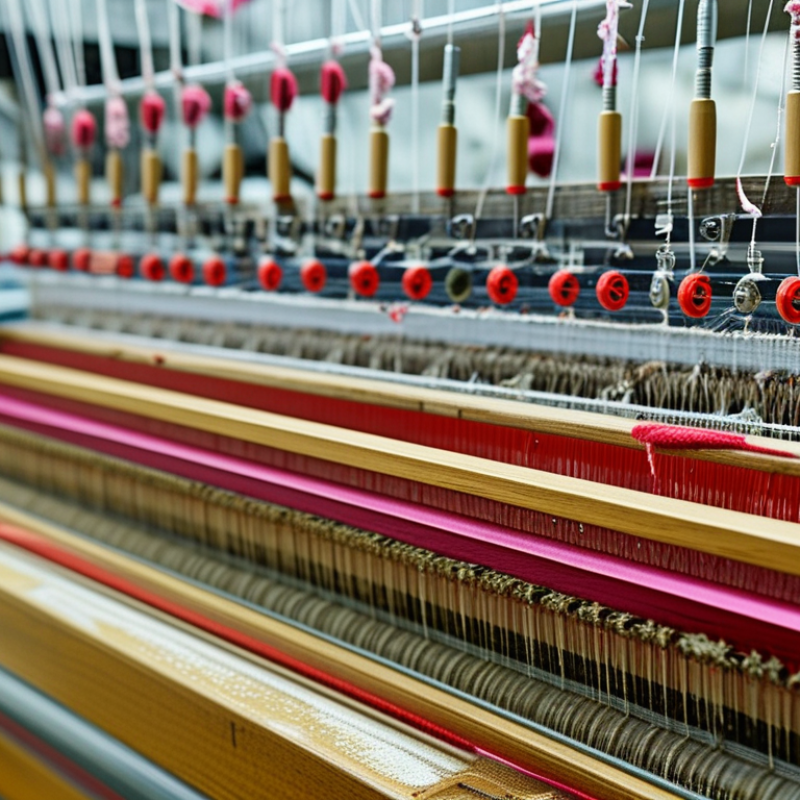
A Jacquard guide board is a perforated board that organizes harness cords above the loom. Each hole keeps one cord aligned with its controlled warp thread. During weaving, this alignment helps form a clean shed for the weft insertion cycle. Small errors can create uneven patterns, thread rubbing, or repeated fabric faults.
Its importance is clearer in 2026. Textile Exchange reported global fiber production reached 124 million tonnes in 2023 and may reach 160 million tonnes by 2030. This growth increases pressure to reduce waste, rework, and unnecessary material consumption. A stable guide board cannot solve every production problem, but it can reduce cord movement and improve pattern consistency. It also supports better machine utilization. That matters when complex designs demand long production runs.
Selection requires more than counting holes. Check the Jacquard head’s gauge, hook layout, cord spacing, board thickness, and operating speed. Materials should resist abrasion, moisture, and repeated tension. Smoothly finished holes matter. They protect cords from fraying during thousands of lifting cycles. ITMF machinery reports continue to track modernization across weaving equipment, but operators still need practical inspection data. Measure hole alignment, surface smoothness, and temperature changes near the machine. Do not trust catalog dimensions alone. I have seen apparently compatible parts perform poorly after installation. A short trial run may reveal more than a specification sheet.
A practical comparison of the main guide-board specifications, typical reference ranges, and selection criteria for Jacquard weaving systems.
| Selection Dimension | Typical Reference Range or Option | Why It Matters | Recommended Choice | Verification Method |
|---|---|---|---|---|
| Primary function | Supports and guides harness cords or heddle cords through accurately positioned holes. | Correct alignment reduces cord rubbing, uneven lift, and pattern distortion. | Choose a board designed specifically for the loom’s harness layout and cord path. | Compare the hole map, board dimensions, and mounting points with the loom drawing. |
| Board material | Hardwood, laminated wood, acrylic or polycarbonate, and engineering polymer. | Material affects dimensional stability, surface friction, impact resistance, and service life. | Use stable polymer or polycarbonate for humid environments; use well-sealed wood where traditional construction is preferred. | Check the material specification, edge finish, and resistance to moisture and abrasion. |
| Board thickness | Common workshop constructions are approximately 6–20 mm thick. | Thickness influences stiffness, mounting clearance, hole-wall length, and total harness depth. | Select the thinnest board that remains rigid and meets the loom’s required clearance. | Measure the existing board and confirm clearance from cords, hooks, and adjacent components. |
| Hole diameter | Often approximately 2–5 mm, depending on cord diameter and construction. | A hole that is too small increases friction; a hole that is too large can permit excess lateral movement. | Use a hole diameter that provides free movement without allowing the cord knot or attachment to pass through. | Measure the cord’s maximum contact diameter and test movement under normal tension. |
| Hole spacing and pitch | Typically specified in millimetres or as a loom-specific grid; no universal pitch applies to every system. | Incorrect pitch changes harness geometry and may cause adjacent cords to rub or cross. | Match the original centre-to-centre spacing and row alignment exactly. | Measure several consecutive holes in both directions rather than checking only one location. |
| Hole layout | Straight grid, staggered grid, or a custom pattern matching the harness design. | The layout determines whether each cord follows the intended vertical and horizontal path. | Choose a custom-drilled layout when replacing a board with a non-standard harness arrangement. | Use a full-scale template or CAD drawing to confirm hole coordinates before production. |
| Edge and hole finish | Rounded, chamfered, polished, or otherwise deburred surfaces. | Sharp edges can cut, fuzz, or accelerate wear on harness cords. | Prioritize smooth, burr-free hole walls and rounded external edges. | Inspect holes under strong light and run a scrap cord through representative holes. |
| Dimensional tolerance | Use the loom drawing or replacement specification; fine harness work generally requires tighter positional control than coarse work. | Small position errors accumulate across many holes and can affect repeat accuracy. | Select a digitally measured or CNC-drilled board for high-density or repeat-critical designs. | Request a dimensional inspection report or verify hole centres against the approved drawing. |
| Rigidity and flatness | The board should remain flat under the installed cord load and normal workshop temperature changes. | Bowing can alter cord angles, increase friction, and cause uneven harness movement. | Choose a reinforced or thicker construction for wide boards and high cord counts. | Place the board on a flat reference surface and inspect for rocking, bowing, or twist. |
| Cord compatibility | Must match the cord material, diameter, knot size, and intended tension. | Compatibility affects friction, noise, wear, and the risk of cord snagging. | Test the actual production cord rather than relying only on nominal hole size. | Perform a manual movement test and inspect the cord after repeated cycles. |
| Environmental stability | Wood is more sensitive to humidity; polymer and composite materials generally offer more consistent moisture performance. | Changes in moisture can affect flatness, hole alignment, and friction. | For humid or frequently changing environments, prioritize sealed or moisture-resistant materials. | Review the material’s moisture guidance and store the board in the same environment as the loom. |
| Mounting and serviceability | Fixed mounting holes, clamps, brackets, or removable guide-board frames. | Secure mounting prevents vibration and makes inspection or replacement easier. | Select a design that can be removed without disturbing the complete harness. | Confirm fastener size, mounting-hole position, access space, and replacement procedure. |
| Quality-control priority | Hole accuracy, smoothness, flatness, material consistency, and correct identification marks. | A visually attractive board can still perform poorly if the hole map or surface finish is inaccurate. | Prioritize measured geometry and smooth cord travel over appearance alone. | Use a checklist covering dimensions, hole count, hole map, finish, flatness, and fit. |
| Best overall decision rule | Exact compatibility is more important than material preference or purchase price. | The wrong geometry can reduce weaving quality even when the board is durable. | Choose the board that matches the loom, cord system, hole map, operating environment, and maintenance needs. | Approve a physical sample or technical drawing before ordering the complete quantity. |
Note: The dimensional ranges above are general workshop reference values, not universal standards. Always confirm the exact hole pattern, spacing, thickness, mounting geometry, and cord requirements for the specific Jacquard loom and harness configuration.