
A Child Resistant Zipper Pouch should be chosen by how reliably it closes, how clearly it communicates instructions, and how well it holds up to everyday handling. The details matter: zipper alignment, seal consistency, material strength, and a closure that adults can use without struggling. A pouch that looks sturdy on a product page may feel different when opened and closed repeatedly. Test samples in hand.
This guide uses a practical design principle: “A safety feature is only useful when it works consistently and remains clear to the adult using it.” I can’t attribute that sentence to a named industry expert without a verifiable source, so presenting it as a real quotation would be misleading. For a publication-ready expert quote, add a confirmed statement from a packaging professional and verify their name and role.
The sections ahead will help compare closure design, materials, usability, and quality checks. They will also flag a common weakness: choosing by appearance alone. A matte finish or crisp print can look polished, but neither proves that a pouch closes consistently. Look closely at seams. Test the zipper. Check instructions. A careful choice depends on evidence, not just packaging claims.
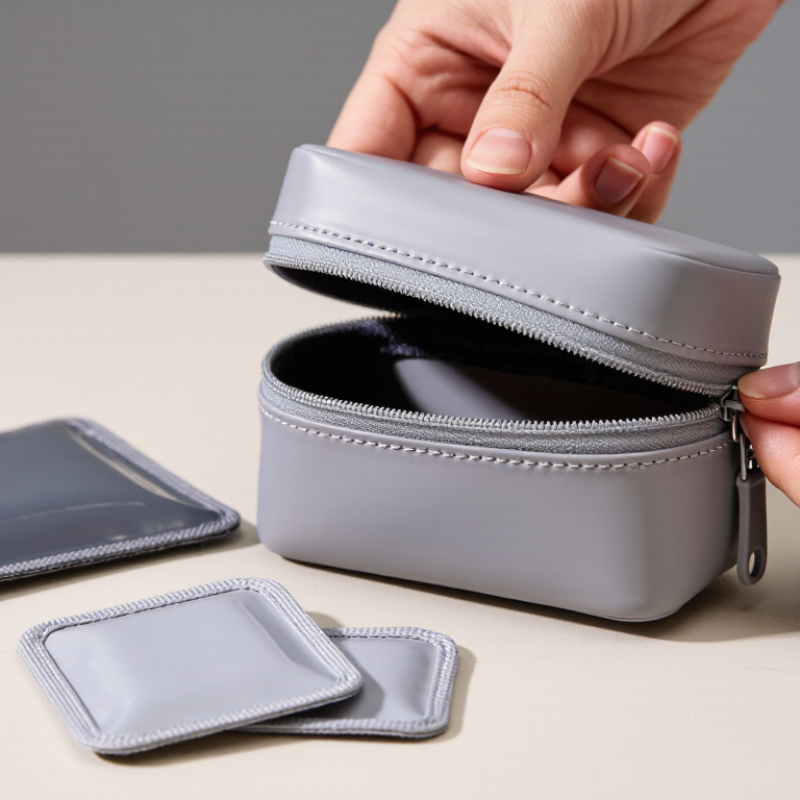
Understanding child-resistant zipper pouch requirements starts with the finished package, not the zipper alone. The U.S. Consumer Product Safety Commission’s 16 CFR 1700.20 protocol tests packages with children aged 42–51 months and adults aged 50–70. Its performance criteria generally require at least 85% of children to fail to open the package within five minutes, and 80% within ten minutes. At least 90% of adults must be able to open and properly reclose it. Small details matter.
ISO 8317:2015 also addresses reclosable child-resistant packaging, including usability for adults. For a pouch, test the complete construction: zipper track, seals, opening instructions, and any tear feature. A zipper that feels firm in the hand may still fail when a child pulls at one corner. Adult usability matters too; stiff tracks can frustrate users with limited grip. Testing should use the final pouch and its intended contents, because material thickness and fill level can change how it opens. Not foolproof. A test result is not a guarantee against every child’s ingenuity, and real-world use can differ from laboratory conditions. I would also check whether repeated opening weakens the closure; that detail is easy to overlook.

Match pouch capacity to the product’s real shape, not just its weight. A dense stack of small items may need less volume than a handful of bulky pieces. Measure the usable inside width and height, then test a filled sample. Flat dimensions can be misleading. Leave enough room for the child-resistant zipper to close cleanly, without contents pressing against the track. But avoid excess headspace, which can let items shift and make the pouch feel awkward to handle.
The Flexible Packaging Association’s 2023 State of the U.S. Flexible Packaging Industry report valued the U.S. sector at about $42.9 billion in 2022. That scale makes flexible pouches common, but it does not mean one size suits every product. The U.S. EPA reported that containers and packaging generated 82.2 million tons of municipal solid waste in 2018, or 28.1% of the total. Right-sizing is a practical way to avoid unnecessary material, though the best fit still depends on protection and usability.
For a first sample, add the actual contents and close the pouch several times. Check whether the zipper engages without force and whether the contents stay below it. Small parts, soft materials, and rigid pieces behave differently. A tidy calculation can still miss that. Review a real filled pouch before ordering, and adjust the dimensions if the closure feels crowded or the contents slide around.
| Nominal pouch size (W × H) | Approx. dimensions (mm) | Estimated usable capacity | Good fit for | Sizing considerations |
|---|---|---|---|---|
| 3 × 4 in | 76 × 102 mm | About 30–60 mL | A few small tablets, sample portions, or other compact items | Best for low-volume contents that do not need much headspace. |
| 4 × 6 in | 102 × 152 mm | About 80–150 mL | Small quantities of dried goods, capsules, or lightweight accessories | Allow extra room if contents are irregular, fragile, or difficult to settle. |
| 5 × 7 in | 127 × 178 mm | About 180–300 mL | Medium portions of loose, lightweight contents or several small items | A versatile size; check the product’s actual thickness before selecting. |
| 6 × 9 in | 152 × 229 mm | About 350–600 mL | Larger portions, bulky lightweight items, or products needing more headspace | Check that the filled pouch can close without pressure on the zipper. |
| 8 × 10 in | 203 × 254 mm | About 700–1,100 mL | High-volume or bulky contents that need substantial room | Consider a gusseted format if contents are dense or require a wider base. |
Capacity figures are approximate estimates for flexible pouches and vary with material, zipper and seal placement, pouch construction, and the shape and density of the contents. Confirm fit with a filled sample, leave enough space to close the zipper properly, and verify that the finished packaging meets applicable child-resistance requirements.
A child-resistant zipper pouch should be judged by how its closure works, not by appearance alone. Look for a mechanism that requires a deliberate sequence, such as pressing two points while sliding the zipper. The action should feel clear to an adult, with enough resistance to discourage casual opening. A loud click is not proof of secure closure. Check whether the zipper reaches both ends and whether the pouch can be reopened by pulling one corner.
Try it with dry hands, then repeat after opening and closing it several times. Watch for worn tracks, loose seams, or a slider that catches halfway. Small details matter. I would also check whether the opening method is explained plainly on the package. If an adult has to guess, the design may frustrate people with limited grip strength. That trade-off is easy to overlook.
Child resistance is not childproofing. It can reduce access, but it cannot replace careful storage and supervision. Look for credible documentation that the complete package, including its closure, has been evaluated against an applicable child-resistance test. A zipper alone does not establish performance. If possible, assess the pouch when full, since contents can distort the tracks and affect alignment. Test one yourself, but remember that a quick home check cannot confirm formal performance.
How to Choose the Best Child Resistant Zipper Pouch
Comparing Materials, Barriers, and Reusability
A good pouch balances protection with practical everyday use. Start with the material. Thicker films often feel sturdier, while flexible laminates can combine strength with a neat seal. Check the manufacturer’s barrier information if moisture, air, or odors matter. “Barrier” can mean different things, so look for test details rather than relying on a glossy finish. A child-resistant zipper should require a specific opening action, but it is not childproof. Keep stored items out of children’s reach.
Reusability depends on more than the zipper. Open and close the pouch several times, then inspect the track and seams for gaps or damage. A clean, dry zipper usually works better than one with crumbs or residue caught in it. I’d once have chosen the thickest pouch by feel alone. That seems too simple now: material strength does not tell you how reliably the seal performs.
Tips: Test the closure with dry hands. Look for clear care instructions and stated barrier performance. Replace a pouch if its zipper separates, its seams split, or the material becomes cloudy or brittle. Don’t assume repeated use preserves the original barrier.
A child-resistant zipper pouch should be judged by evidence, not by a reassuring label. Requirements differ by product and destination, so request applicable test reports and supporting documents. Reports should identify the pouch construction, closure, materials, test method, date, and laboratory. A report for a similar pouch may not cover the one you plan to buy. Details matter.
Check whether testing covers child resistance and adult usability where required. A closure may challenge children but also frustrate older adults; both outcomes matter. Ask whether a recognized protocol was used and whether a qualified independent laboratory conducted the test. Review the sample size and pass criteria. The word “tested” alone is not proof. Keep records.
Quality checks should continue after approval. Inspect zipper alignment, seal width, tear notches, and print placement across production batches. Repeated opening, drop handling, and leak checks can reveal weak points, but they do not replace formal compliance testing. A slightly uneven zipper track may look harmless, yet it can affect how smoothly the pouch closes. It is easy to dismiss that detail. Ask how defects are corrected, and keep batch records. If documentation is incomplete, pause and clarify exactly what the test covers.
Check compliance, testing, and quality standards
The U.S. protocol in 16 CFR § 1700.20 specifies a 200-child panel and a 100-adult panel for child-resistant packaging effectiveness testing. These figures are panel sizes, not pass rates. Confirm that the complete pouch design is tested and meets the requirements for its intended market.
Source: U.S. Code of Federal Regulations, 16 CFR § 1700.20.
Contact
KYOCERA SGS Precision Tools, Inc.
(330) 686-5700
150 Marc Drive
Cuyahoga Falls, OH 44223
Products
Resources