
KYOCERA SGS Precision Tools Group
Why Choose an Ozone Sensor for Accurate Monitoring?
Ozone can be useful in controlled treatment systems, yet it becomes harmful when concentrations rise unexpectedly. An Ozone Sensor helps operators see that change before it becomes invisible risk.
Atmospheric scientist Dr. William L. Chameides has explained, “Ozone is not emitted directly, but formed in the atmosphere.” That distinction matters. A sensor must measure the gas itself, not simply estimate it from operating conditions.
Imagine a water treatment room at 2 p.m. The generator is running. A ventilation fan weakens. The room still looks normal, but the ozone level may be increasing. A calibrated Ozone Sensor can provide a visible reading, trigger an alarm, and support faster corrective action.
Accuracy depends on more than a low price. Sensor technology, calibration records, response time, humidity compensation, and maintenance all influence the result. A reliable device should also suit the application. Outdoor air monitoring, industrial processing, and indoor safety checks may require different measurement ranges.
Small details matter.
A clean sampling line matters. So does placement.
However, no sensor is perfect. Cross-sensitivity, dust, temperature shifts, and aging components can affect readings. Treating one number as unquestionable would be careless. Regular calibration and comparison with a trusted reference method remain necessary.
Choosing an Ozone Sensor is therefore a decision about evidence, not convenience. The strongest monitoring approach combines dependable hardware, trained users, documented procedures, and honest review of uncertain readings. That discipline turns a fluctuating gas concentration into useful information for safer, more controlled operations.
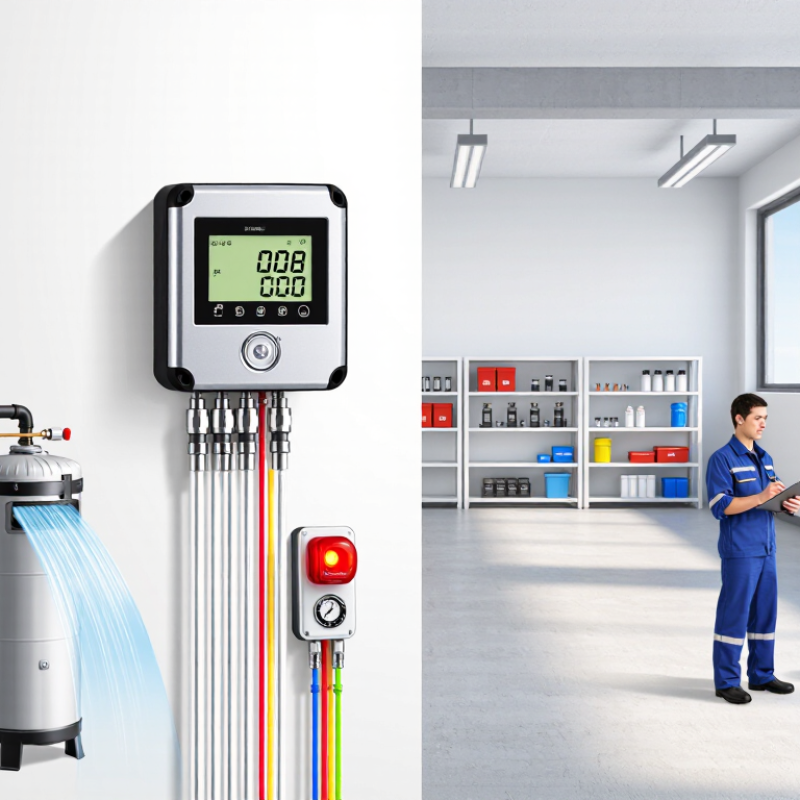
An ozone sensor detects ozone, or O3, in air and converts its concentration into a readable signal. Ozone is highly reactive, so even small measurement errors can affect safety decisions. Common sensors use ultraviolet absorption, electrochemical reactions, or metal-oxide changes. A UV sensor measures how much light ozone absorbs, while an electrochemical sensor produces current during a controlled chemical reaction. In practice, the instrument draws air across the sensing element and calculates concentration in parts per billion or parts per million.
The World Health Organization’s Global Air Quality Guidelines (2021) recommend an eight-hour ozone limit of 100 micrograms per cubic metre. The US Environmental Protection Agency’s National Ambient Air Quality Standards set an eight-hour level of 0.070 parts per million. OSHA lists 0.1 parts per million as an eight-hour workplace exposure limit. These values are not interchangeable. They serve different monitoring purposes. A sensor can also be correct in a laboratory but misleading in a damp room. Humidity, temperature, airflow, and interfering gases may distort readings.
Tips: Place the sensor near the breathing zone or emission source. Avoid sealed corners with stagnant air. Record temperature and humidity beside every reading. Perform zero checks before deployment and calibration checks at scheduled intervals. Compare results with a reference instrument when decisions carry serious consequences. No sensor is perfect. Reviewing unexpected readings is part of accurate monitoring.
| Monitoring Dimension | Typical Data or Specification | How It Works | Why It Matters for Accuracy | Common Strengths | Important Limitations |
|---|---|---|---|---|---|
| Ozone identity | O₃; molecular weight: 48.00 g/mol | The sensor responds to ozone molecules in air or dissolved water. | A dedicated ozone sensor is designed to distinguish ozone exposure from general air-quality changes. | Direct measurement of the target gas | Ozone is chemically reactive and can degrade or interfere with some sensing materials. |
| UV absorption method | Usually centered near 254 nm; commonly used for low- to high-range gas monitoring | Ozone absorbs ultraviolet light. The reduction in light intensity is related to concentration through the Beer–Lambert law. | Provides a direct optical measurement without consuming the ozone sample. | Good stability, repeatability, and suitability for continuous monitoring | Requires a clean optical path, stable lamp or light source, and compensation for particles or humidity when applicable. |
| Electrochemical method | Commonly used for personal, indoor, process, and safety monitoring; range depends on cell design | Ozone undergoes an electrochemical reaction at an electrode, producing a current proportional to concentration. | Offers useful sensitivity at relatively low concentrations and can provide compact, low-power detection. | Small size, low energy consumption, and practical field deployment | Electrolyte aging, temperature, humidity, and cross-sensitivity may affect calibration and service life. |
| Metal-oxide semiconductor method | Typically used for trend detection and broad screening rather than high-precision reference measurement | Ozone changes the electrical resistance of a heated metal-oxide sensing layer. | Can indicate rapid changes in ozone levels, especially where cost and ruggedness are priorities. | Low component cost, simple electronics, and long operating potential | Usually more affected by humidity, temperature, and other oxidizing gases than UV-based instruments. |
| Measurement range | Ambient air is commonly measured in parts per billion (ppb); workplace and process systems may require parts per million (ppm). 1 ppm = 1,000 ppb | The sensing element converts ozone concentration into an optical, electrical, or chemical signal. | Selecting a sensor whose full-scale range matches the application helps prevent saturation and improves resolution. | Supports environmental, occupational, water-treatment, and ozone-generation applications | A sensor designed for high concentrations may not resolve low ambient levels effectively, and vice versa. |
| Response time | Often specified as T90, the time required to reach 90% of the final reading; actual values vary from seconds to minutes. | Gas flow rate, sample tubing, filtering, chamber volume, and sensor chemistry influence the time response. | Fast response helps identify leaks, process changes, and short-term exposure events. | Enables real-time alarms and closed-loop process control | Long sampling lines, adsorption, or insufficient airflow can make the displayed value lag behind the actual concentration. |
| Calibration and verification | Zero checks and periodic span verification are recommended; calibration intervals depend on technology and operating conditions. | The sensor output is compared with a known zero condition and a traceable ozone reference or validated comparison instrument. | Regular verification detects drift and supports reliable long-term data. | Improves confidence in alarms, compliance records, and process decisions | Calibration frequency must account for temperature, humidity, contamination, operating hours, and exposure level. |
| Safety relevance | Ozone is a strong oxidant and can irritate the eyes and respiratory system. A commonly cited occupational exposure limit is 0.1 ppm as an 8-hour time-weighted average in U.S. OSHA regulations. | A calibrated sensor continuously tracks ozone and can activate ventilation or alarms when configured thresholds are exceeded. | Continuous measurement can reveal exposure conditions that periodic manual sampling may miss. | Supports worker protection, leak detection, and ventilation control | Exposure limits vary by jurisdiction and application; sensor alarms should not replace required safety procedures. |
| Best-fit applications | Indoor air monitoring, workplace safety, ozone generators, water treatment, food processing, and environmental studies | The sensor is installed at a representative sampling point and connected to a display, data logger, controller, or alarm system. | Application-specific placement and technology selection reduce sampling errors and improve data quality. | Flexible integration with monitoring and automation systems | Poor placement, condensation, blocked inlets, or inadequate airflow can produce misleading readings. |
Note: Values and performance characteristics are typical engineering guidance rather than universal specifications. The actual range, accuracy, response time, and calibration interval depend on sensor design, sampling conditions, and the applicable measurement standard.