
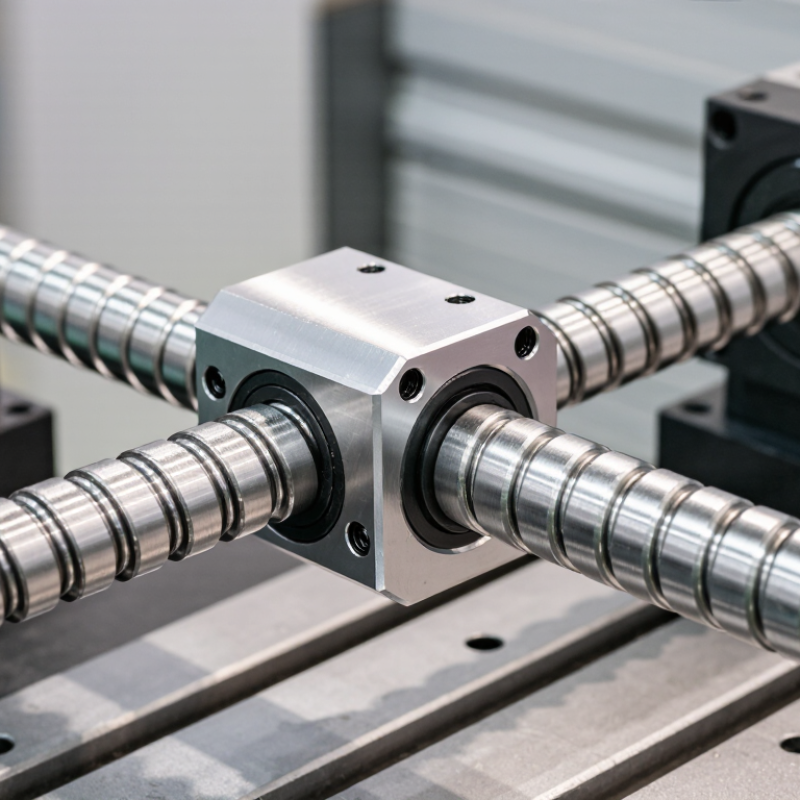
A threaded linear shaft is a round mechanical shaft with a helical thread along part or all of its length. A matching nut engages that thread, converting relative rotation into straight-line movement. Depending on the design, the shaft or nut may rotate while the other travels.
The thread’s lead—the distance the nut advances in one revolution—helps determine travel speed and positioning resolution. Pitch describes the spacing between adjacent thread peaks. They are related, but not interchangeable.
Picture a compact actuator moving a sensor carriage along a frame. The threaded shaft provides the drive, while separate supports and guides help control alignment and resist side loads. It is not a magic fix. Dust, poor lubrication, or a bent shaft can increase friction and cause uneven motion. Select a shaft by checking load, travel, speed, duty cycle, and available space; then confirm that the nut, bearings, and supports suit those conditions.
The International Federation of Robotics’ World Robotics 2024 report recorded 541,302 industrial robot installations worldwide in 2023. That figure reflects broad automation activity, not threaded-shaft use specifically, but it shows why dependable linear movement matters in equipment design.
A detail worth reconsidering: designers sometimes size the drive for load alone and overlook alignment.
