
How to Choose a Heat Recovery Ventilator in 2026

Choosing a Heat Recovery Ventilator in 2026 means matching equipment to the home, not chasing the biggest efficiency number. An HRV exchanges stale indoor air for outdoor air while transferring heat between the two air streams. This can reduce ventilation heat loss, but performance depends on sizing, climate, duct layout, and regular maintenance. Details matter.

Compare rated airflow at the pressure your duct system requires, not just a headline figure. Check sensible recovery efficiency, sound ratings, filter availability, and control options against the manufacturer’s model-specific data. A quiet unit beside a bedroom may matter more than a small efficiency gain. So can easy filter access. An oversized or poorly balanced system may create noise and uneven airflow, even when its specifications look impressive. That is an easy detail to overlook.

Ask a qualified HVAC professional to assess the home’s ventilation needs and existing ducts before choosing a model. Review independent performance information where available, and confirm that the installation plan includes balancing and commissioning. A polished product sheet cannot show how a particular unit will sound in your hallway or fit above a crowded utility room. This guide explains the practical trade-offs, questions to ask, and features worth comparing. Some choices are less tidy than a checklist suggests, and the best fit may not be the most powerful model.
How to Choose a Heat Recovery Ventilator in 2026

Identify Your Home’s Ventilation Needs

Start with the rooms and people, not the equipment. Count regular occupants and note where they spend time: a closed bedroom, a busy kitchen, or a damp bathroom each creates different ventilation demands. Check whether windows stay shut through winter and whether the home feels stuffy after several hours. A tight, recently renovated house may need more deliberate fresh-air planning than a drafty older one.

Look for signs that help explain your needs. Condensation on bedroom windows in the morning can point to excess moisture, while lingering cooking smells may signal weak air movement. Note room sizes, door positions, and existing exhaust fans; these details affect how air can travel. If possible, ask a qualified ventilation professional to measure airflow and review the home’s layout. Guessing from floor area alone can miss a problem. I’ve found that even a simple room-by-room checklist makes conversations more useful, though it cannot replace measurements.

Tips: Record how many people use each room, when odors or moisture appear, and whether doors are usually closed. Share those notes during an assessment. Small details matter. Don’t assume one setting will suit every season.

How to Choose a Heat Recovery Ventilator in 2026: Identify Your Home’s Ventilation Needs

These illustrative rates use a 2,000-ft² home and the equation 0.03 × floor area + 7.5 × (bedrooms + 1) CFM. Use the result as a starting point when comparing HRV airflow capacity, not as a final equipment size: applicable code, infiltration adjustments, occupancy, and local exhaust requirements can change the ventilation design.

Assess Climate, Floor Area, and Existing Ductwork

Climate should guide the core choice. In cold regions, compare sensible heat-recovery performance and frost-control operation at low outdoor temperatures. Humid summers make moisture transfer, condensate drainage, and controls equally important. An HRV transfers heat; an ERV also transfers some moisture. Neither label alone guarantees comfort.

Floor area and bedroom count help estimate airflow. ASHRAE Standard 62.2-2022 gives a whole-dwelling benchmark of 0.03 cfm per square foot plus 7.5 cfm per bedroom, plus 7.5 cfm. For a 2,000-square-foot home with three bedrooms, that is about 90 cfm before applicable adjustments. A calculation is only a starting point. Local requirements and measured leakage can change the final target.

Existing ductwork can make or break the installation. Check duct diameter, length, bends, filter resistance, and available space for separate outdoor-air and exhaust runs. A narrow, dusty branch may reduce delivered airflow, even when the unit’s rated capacity looks adequate. Have airflow measured and balanced at the grilles after installation. It is easy to over-trust the floor-area estimate; actual room use and a closed bedroom door can still leave ventilation uneven.

Compare Heat Recovery, Airflow, and Efficiency Ratings

A heat recovery ventilator should be compared by what it transfers, how much air it moves, and how efficiently it does so. Sensible heat recovery transfers warmth between outgoing and incoming air. Enthalpy recovery also transfers some moisture, which can matter in humid or very dry climates. Check the product documentation for the type of recovery and the conditions used to test it. A single efficiency percentage can hide important differences.

Airflow must match the home’s ventilation needs, not just the unit’s maximum rating. Compare the stated airflow at the external static pressure your duct system is likely to create. Long ducts, tight bends, and dirty filters can reduce actual delivery. Look for adjustable fan settings and consider whether supply and exhaust airflow can be balanced. Too much airflow may add noise; too little may leave bedrooms stuffy. Details matter.

Efficiency ratings are useful only when their test conditions are comparable. Review heat recovery efficiency alongside fan energy use, often listed as watts per airflow rate. A high heat-transfer figure may not mean low overall power consumption. Check sound levels at the airflow you expect to use, not only at the quietest setting. Also consider filter access and replacement costs. A rating chart cannot capture every installation. That part deserves a second look.

Check Noise, Filters, Controls, and Maintenance Requirements

How to Choose a Heat Recovery Ventilator in 2026

A heat recovery ventilator should suit your home’s airflow needs, not just its advertised efficiency. Check noise ratings at the airflow setting you expect to use. A unit near a bedroom may sound different from one in a utility room. Ask how it should be mounted, and whether ducts need sound insulation. Small details matter.

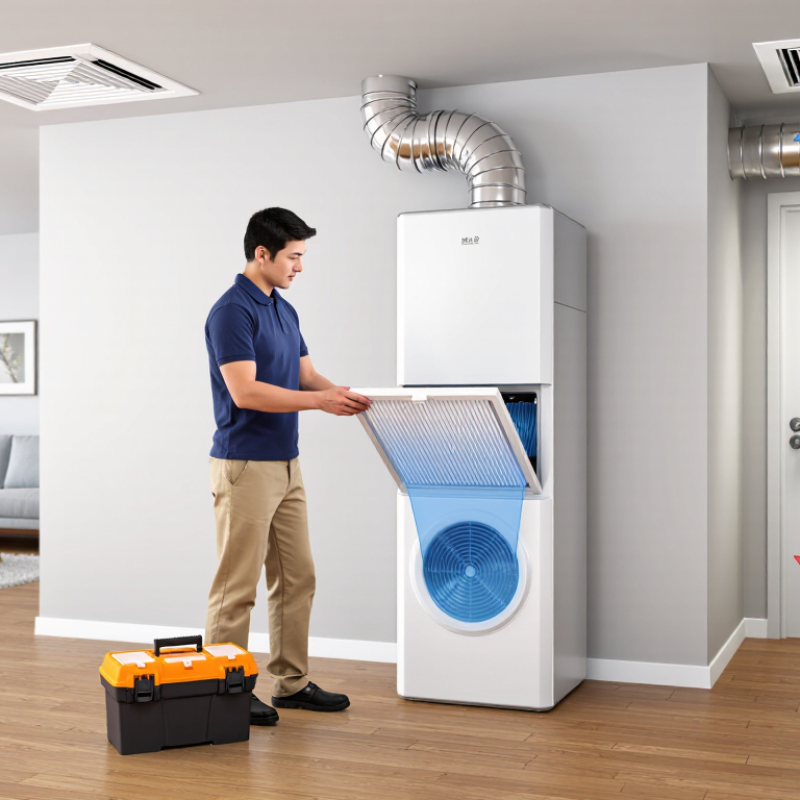
Compare filter type, replacement cost, and availability before buying. A washable pre-filter can catch larger dust, while finer filters may need more frequent replacement. Check the control panel for clear fan-speed settings, a boost option, and filter-change alerts. Simple controls help, but they should still let you adjust ventilation when cooking or showering. Review the maintenance schedule and confirm you can reach the filters without moving equipment. Follow the installation and service instructions; actual needs vary with dust, pets, and use. One thing is easy to overlook: a low purchase price may mean harder-to-find filters later.

Tips: Ask the installer to demonstrate filter removal and show the noise level at normal operation. Keep a note of filter changes. It’s a small task, but easy to forget.

Confirm Installation Costs, Code Compliance, and Warranty

Before comparing heat recovery ventilators, request a written installation estimate. Get it itemized. The quote should separate the unit, labor, duct changes, electrical work, controls, and permit fees. Ask whether the installer has included balancing airflow and testing the system after startup. A low price may omit these steps, leaving rooms noisy or poorly ventilated. Check access too: a cramped attic or long duct runs can increase labor costs.

Confirm local code requirements with your building department or a qualified mechanical contractor. Required ventilation rates, duct insulation, condensate drainage, and electrical connections can vary by location and project. Ask who obtains permits and arranges inspection. Keep the approved plans and test results. Small paperwork details are easy to overlook, and correcting an installation later can be expensive.

Read the warranty before choosing a unit. Compare coverage for the heat exchanger, motors, controls, and other parts, along with any labor coverage. Ask what maintenance is required to keep coverage valid, and whether filters must be replaced on a set schedule. Save the warranty, installation invoice, and commissioning report together. I would not assume “long coverage” means every repair is included; the exclusions matter. A clear answer from the installer is worth more than a vague promise.

How to Choose a Heat Recovery Ventilator in 2026 — Confirm Installation Costs, Code Compliance, and Warranty
Selection Factor What to Compare Planning Benchmark What to Confirm Before Purchase
Installed cost Equipment, labor, ductwork, electrical work, controls, commissioning, and permit fees. For U.S. planning, a whole-house HRV installation may run roughly $2,000–$5,500. Complex retrofits or extensive new ductwork can cost more. Request an itemized quote. Check whether the price includes new ducts, exterior hoods, balancing, controls, tax, and permit costs.
System sizing Required ventilation airflow, usually stated in cubic feet per minute (CFM), and the airflow available at the selected unit’s operating pressure. Sizing depends on the home’s floor area, number of bedrooms, local ventilation rules, duct resistance, and the ventilation design—not floor area alone. Ask for a documented airflow calculation and measured supply and exhaust airflow after installation.
Heat-recovery performance Sensible recovery efficiency, tested airflow, and performance at the temperatures and operating conditions relevant to the home. Compare certified test data at comparable airflow and static pressure. A higher efficiency figure should not be compared across units unless test conditions match. Request the product’s current performance data and confirm that the quoted model—not just a product family—meets the project requirements.
Sound and controls Published sound ratings, fan-speed options, boost control, and access to filters and service parts. Sound ratings are most useful when compared at the same airflow and test conditions. Remote or boost controls may be useful for bathrooms or kitchens. Ask where the unit will be installed, how vibration will be controlled, and whether the controls and filters are included in the quote.
Cold-weather operation Frost protection method, defrost cycle, condensate drainage, and performance in the local winter climate. Frost-control requirements depend on outdoor temperature, humidity, and the unit’s design; there is no single defrost approach suitable for every climate. Confirm the manufacturer’s stated operating limits, drain or condensate provisions, and whether the system’s defrost cycle affects ventilation airflow.
Code compliance Local mechanical and energy codes, ventilation-rate requirements, permits, and applicable HRV test or certification requirements. ASHRAE Standard 62.2 is a commonly referenced residential ventilation standard in the United States, but the locally adopted code and edition govern the project. Have the installer or local building department confirm the applicable requirements, permit needs, ventilation rate, and required documentation before work begins.
Warranty Separate coverage for the heat-exchange core, fans, controls, and other parts; labor coverage may be separate. Warranty terms vary by product and seller; there is no single industry-wide coverage period. Get the written warranty and check coverage length, exclusions, registration deadlines, service responsibilities, and whether labor and shipping are covered.
Maintenance and commissioning Filter access and replacement cost, cleaning requirements, airflow balancing, and handover documentation. Filters require periodic inspection and cleaning or replacement; the interval depends on the model, use, and indoor conditions. Confirm the recommended maintenance schedule and ask for commissioning results, operating instructions, and a record of final airflow measurements.
Cost note: Installation figures are approximate U.S. budgeting ranges, not a quote. Actual costs vary with region, home layout, ductwork, equipment capacity, labor rates, and local permit requirements.