China Best Fresh Air Fan Manufacturer for Global Buyers?
Choosing a China Best Fresh Air Fan Manufacturer for Global Buyers? The answer depends on more than a low quotation or polished product photos. Buyers need consistent airflow, clear technical documentation, dependable production, and support after shipment. A Fresh Air Fan may look impressive on a specification sheet, yet perform differently once duct resistance, filters, and room layout are considered. Details matter.
Ventilation researcher William P. Bahnfleth’s work offers a useful principle: evaluate the air a system delivers, not merely its advertised capacity. This is a practical takeaway, not a direct quotation. For buyers, it means asking for performance data at stated static pressure, noise readings, motor details, and test conditions. Request sample inspection records, production quality procedures, and evidence supporting efficiency claims. A factory tour or video audit can also reveal how motors, impellers, and housings are assembled.
This guide examines how to compare Chinese manufacturers by product range, customization, quality control, export experience, and communication. It also explains where buyers should verify claims independently. Certifications and test reports matter, but their scope and issuing bodies should be checked. A supplier’s response to a difficult technical question can be revealing. Sometimes, the honest answer is “we need to test that.” That is not a weakness. It may be more reassuring than a perfect promise. By focusing on measurable performance and transparent process, global buyers can shortlist suppliers with fewer surprises and make decisions suited to their buildings, budgets, and operating needs.
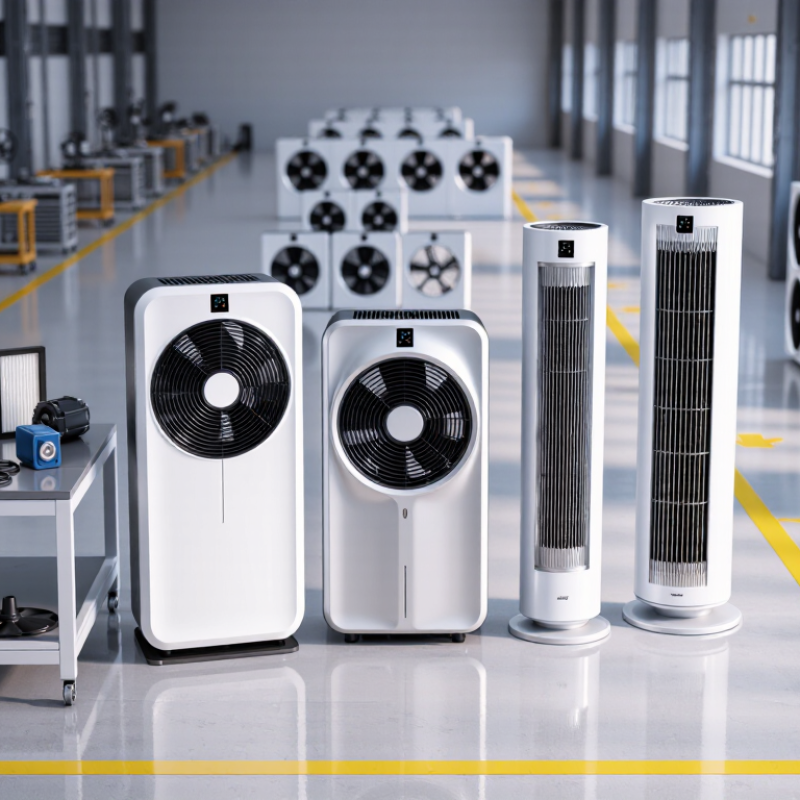
Understanding Fresh Air Fans and Their Core Functions
A fresh air fan brings outdoor air into an indoor space, helping dilute stale air, odors, and indoor pollutants. In many systems, it works alongside exhaust equipment: supply air enters through a duct while used air leaves through another route. The fan moves air; it does not automatically clean it. Filtration depends on the installed filter and its condition. Small detail, big difference.
Core performance is measured by airflow, often stated in cubic feet per minute or cubic metres per hour. The right capacity depends on room size, occupancy, duct resistance, and how the space is used. A quiet fan with insufficient airflow may look suitable on paper, yet leave a bedroom stuffy by morning. One detail is easy to miss: a clogged filter can reduce airflow while the motor still runs. Proper installation matters too; sharp duct bends and poor sealing can add noise or waste capacity. Fresh air should feel steady, not drafty. Still, fan selection alone cannot guarantee comfort. Humidity, outdoor air quality, and maintenance schedules deserve attention, and real buildings rarely behave exactly like a simple calculation.
Key Criteria for Evaluating Chinese Manufacturers
Choosing a Chinese fresh air fan manufacturer requires more than comparing catalog airflow figures. Ask for performance data measured at stated static pressure, not only free-air conditions. Request sound readings, power consumption, motor temperature, and test setup. Small details matter: a unit measured at one distance may sound different inside a bedroom wall.
Review manufacturing consistency. Ask how impellers are balanced, how motors are inspected, and whether each production lot receives a final run test. A sample should match the proposed production model in casing, wiring, and control board. Check how the supplier handles replacement parts and technical questions after shipment. Slow answers during sampling can become a bigger problem later.
Verify documentation against the destination market and the exact model being purchased. Ask for current reports, traceable model numbers, and clear warranty terms; do not rely on a certificate image alone. Compare lead times with actual factory capacity, and request a written inspection plan before placing an order. Visit if feasible, or arrange an independent inspection. No checklist is perfect. I would still test a sample in the intended duct layout, because bends, filters, and installation errors can reduce real airflow. A manufacturer that discusses limitations clearly may be more useful than one promising everything.
Comparing Product Quality, Technology, and Customization
China Best Fresh Air Fan Manufacturer for Global Buyers?
Comparing Product Quality, Technology, and Customization
For global buyers, a fresh air fan should be judged by measurable performance, not polished product photos. Check airflow, static pressure, power use, and noise at the same operating point. Numbers need context. A quoted airflow rate means little without the test conditions behind it. Request test reports and compare them against your project requirements.
Build quality is visible in details. Inspect the casing seams, impeller balance, wiring protection, and finish around mounting points. Ask how the motor performs during extended operation, and whether replacement parts are readily available. Smart controls and sensors can improve usability, but only when settings are clear and stable. More features are not always better. A complicated interface may frustrate installers and users.
Customization can cover dimensions, duct connections, control options, voltage, and packaging. Confirm which changes are standard and which require new tooling or longer lead times. A sample unit can reveal fit and sound issues before a larger order, though one sample cannot prove long-term reliability. No supplier is flawless. Buyers should document agreed specifications, inspect production samples, and leave room for practical improvements after installation.
Checking Certifications, Export Experience, and After-Sales Support
For global buyers, a fresh-air fan’s certificate folder is only a starting point. Check that safety and quality certificates match the exact model, factory, and destination market. Verify them with the issuing body, and request test reports showing airflow, static pressure, power use, and noise levels. Details matter. A certificate alone cannot confirm that every production batch performs consistently.
The International Energy Agency’s Energy Efficiency 2023 report says buildings account for about 30% of global final energy consumption. That makes measured efficiency relevant, not just a sales claim. Ask for test conditions and rated performance at realistic duct resistance; a fan’s airflow can fall when connected to a long, narrow duct. Compare watts per unit of airflow, and confirm the method used. Numbers without test context can mislead.
Export experience is best checked through recent shipment references, destination-market documentation, and clear answers about packaging and lead times. After-sales support should include a named technical contact, spare-parts availability, warranty terms, and response times. Request a sample troubleshooting guide before ordering. It reveals whether support is practical. Paperwork and promises may look polished, but response quality is harder to judge until a fault occurs. A video call with an engineer can help buyers assess that gap before committing.
China Best Fresh Air Fan Manufacturer for Global Buyers?
A practical buyer scorecard for checking certifications, export experience, and after-sales support.
Suggested evaluation weights—not market statistics. Verify certificates, export records, and service commitments with each supplier before making a decision.
Steps for Selecting a Reliable Supplier for Global Markets
A reliable fresh air fan supplier should prove performance, not just provide attractive catalog numbers. Request a certified airflow and pressure curve, motor power data, sound levels, and the exact test conditions. AMCA 210/ASHRAE 51 provides laboratory methods for measuring fan aerodynamic performance. Ask whether the proposed model was tested using this method, and request a report traceable to the production model. Paper is not proof. Check that sample units match the drawings, wiring, and materials listed in the offer.
Energy use deserves close attention. The IEA’s 2024 Global Status Report for Buildings and Construction estimates that buildings and construction used 32% of global energy in 2023. For buyers, this makes verified efficiency and realistic operating-point data important—not merely a high maximum airflow.
Compare suppliers using your actual duct resistance, target airflow, voltage, and duty cycle. Then review factory inspection records, spare-parts availability, packaging, and response times across time zones. A neat sample can still hide inconsistent batch quality. Request production samples or inspection evidence before scaling an order, and clarify who handles technical questions after shipment. No checklist removes every risk. Revisit your assumptions when site conditions differ.