
A Cannabis Gummies Container is more than a small jar on a retail shelf. It protects texture, supports product identification, and helps maintain a clear, controlled presentation. For manufacturers, the container may include a glass jar, child-resistant closure, tamper-evident seal, label panel, and moisture barrier. Each detail matters when gummies must remain separate, recognizable, and visually appealing.
Market research shows why this packaging category deserves closer attention. Grand View Research forecasts strong growth for the global cannabis edibles market through 2030, driven partly by convenient formats such as gummies. The Brightfield Group has also identified edibles as a major growth segment in regulated cannabis markets. These reports describe demand, but they do not answer every packaging question. Material choice, storage conditions, accessibility, and recycling remain practical concerns.
James Eichner, co-founder of Sana Packaging, has stated, “Sustainable packaging is the future of cannabis packaging.” His comment gives the discussion a useful direction. A responsible Cannabis Gummies Container should balance safety, usability, branding, and environmental impact. It should open smoothly for authorized adults, while remaining difficult for children to access. It should also fit neatly in a cabinet, resist moisture, and display essential information without visual clutter. The picture is not perfect. Compostable materials may require stronger barriers, while highly durable plastics can create recycling challenges. This guide examines how these containers work, what features matter, and where better design decisions are still needed.
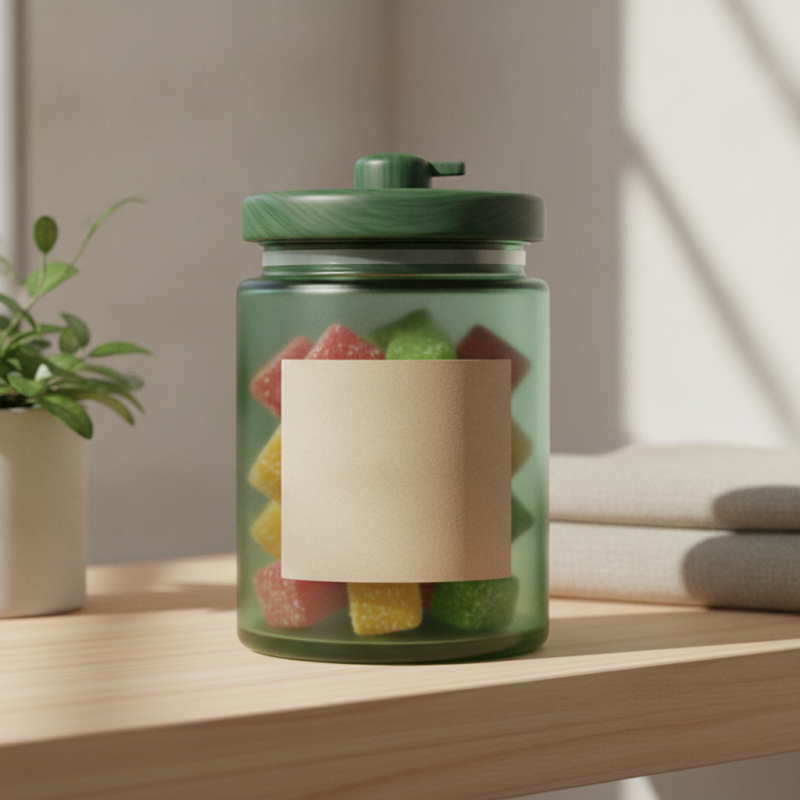
A cannabis gummies container is a purpose-built package for storing and protecting edible products in legally regulated markets. It may be a small jar, pouch, or sealed tray. Its main purpose is simple: keep gummies fresh, identifiable, and separated from accidental access. Unlike ordinary candy packaging, it often includes child-resistant and tamper-evident features.
A reliable container helps limit moisture, air, heat, and light. These factors can affect texture, flavor, and product stability. A tight seal matters. So does clean internal material that does not easily transfer odors. Clear labeling should show ingredients, serving information, batch details, and an expiration date where required. Packaging professionals also check whether the container meets local safety and recycling standards.
Good design supports responsible handling, not just appearance. A caregiver should recognize it quickly as a regulated edible product, even when the package looks compact. Storage guidance may recommend a cool, dry place away from children and pets. That advice is practical, though real homes are not always ideal. A container can reduce risk, but it cannot replace careful storage. Labels can fade, lids can loosen, and users may overlook small warnings. For that reason, manufacturers and consumers should inspect the package before use and report damaged or unclear packaging through the appropriate legal channel.

What Is a Cannabis Gummies Container and How Is It Used?
Common Materials and Container Designs
A cannabis gummies container is packaging designed to protect edible products during storage, transport, and daily use. In places where these products are legally permitted, the container must support clear labeling and responsible handling. It should limit moisture, light, air, and accidental access. A loose lid is not a minor flaw.
Glass offers a strong barrier against odors and humidity. It also feels clean and reusable, although it can break during shipping. Plastic containers are lighter and more practical for frequent handling. Many use food-contact materials, but quality can vary between suppliers. Aluminum provides excellent light protection and resists dents better than glass. Still, its inner lining needs careful inspection.
Design matters as much as material. Child-resistant closures may use push-and-turn or squeeze-and-turn mechanisms. Tamper-evident seals show whether the package was opened before purchase. Opaque walls help protect color and texture from sunlight. A wide opening makes counting easier, but it may expose contents to air. A narrow opening improves control, though some users may find it frustrating.
From a packaging review perspective, I would check the seal, hinge, label clarity, and closure strength. I would also test the container after repeated opening. This step is often overlooked. No design is perfect. Recycling guidance should remain visible and accurate, because mixed materials can complicate disposal. Local packaging rules must always guide the final choice.
A cannabis gummies container is more than a small jar. It creates a controlled barrier around each gummy, limiting moisture, oxygen, light, and outside contamination. A tight induction seal can reduce air exchange, while a suitable liner helps prevent sticking and odor transfer. In practical testing, a water-activity meter is more dependable than touch. The U.S. Food and Drug Administration identifies 0.85 as an important water-activity threshold for controlling many food-safety risks, although each gummy formula needs its own validation.
Light and temperature also affect texture and stability. Amber or opaque packaging can reduce exposure to ultraviolet light. A cool, stable storage area helps prevent softening, sweating, and sugar crystallization. The U.S. Pharmacopeia’s General Chapter <659> emphasizes that packaging materials must suit the product’s storage conditions. That sounds obvious. It is often missed.
A reliable container should also support consistent handling. Clearly defined fill space, a strong closure, and a tamper-evident feature reduce accidental exposure after opening. The OECD Global Plastics Outlook reports that packaging represents about 40% of global plastic use, so material selection deserves more thought than simply choosing the thickest container. Recyclability, barrier performance, and real-world sealing must be tested together. No package is perfect. A container that protects quality in a laboratory may perform differently in a warm delivery vehicle. Temperature-cycle testing and seal checks can reveal that uncomfortable gap.
A cannabis gummies container is more than simple packaging. It should protect the product from moisture, heat, light, and accidental access. In regulated markets, consumers should keep gummies in the original, clearly labeled container. That label can show serving information, ingredients, warnings, and expiration details. A plain jar may look tidy, but it removes important safety information.
Storage habits matter. Keep the container locked, out of sight, and away from children, visitors, and pets. A high shelf is not enough. A 2023 Pediatrics analysis of National Poison Data System records identified 7,043 cannabis exposures among children under six from 2017 to 2021. Nearly 98% were unintentional. These figures make sealed, child-resistant packaging essential, but packaging alone cannot replace careful storage. A locked cabinet is better.
Handle each gummy with clean, dry hands, and close the lid immediately after use. Do not transfer gummies into candy jars, lunch boxes, or unmarked containers. Heat can soften them, while humidity may change their texture and appearance. If the seal is damaged, the label is missing, or the contents look unusual, do not guess. Follow local disposal guidance. I sometimes see storage advice focus too heavily on the container itself. The real weakness is often human routine: an open lid, a misplaced key, or a familiar-looking package.
| Container Feature | What It Is | Primary Use | Safe Storage Practice | Handling Reminder |
|---|---|---|---|---|
| Child-resistant container | A container designed to make access difficult for young children while remaining usable by adults. | Helps reduce the risk of accidental access. | Keep the closure fully secured after every use; do not rely on the package alone to prevent access. | Check that the lid or closure is properly engaged before storing the container. |
| Opaque or light-blocking container | A container that limits exposure to light, which can affect the quality of some cannabis products over time. | Helps protect the product from unnecessary light exposure. | Store in a cool, dark, dry location away from windows and direct sunlight. | Return gummies to the container promptly after removing a serving. |
| Airtight container | A container with a close-fitting seal that limits air exchange and helps reduce contamination. | Helps preserve texture and reduce exposure to moisture and odors. | Close the lid firmly and avoid leaving the container open for extended periods. | Use clean, dry hands or utensils when handling the gummies. |
| Tamper-evident package | Packaging that shows visible evidence if it has been opened or altered before purchase. | Helps consumers identify possible package interference. | Inspect the seal or indicator before first use and do not use a package that appears damaged. | Report suspected tampering to the retailer or appropriate local authority. |
| Single-serving packet | An individual package containing one measured serving or a clearly defined amount. | Supports portion identification and convenient transport. | Keep unused packets together in a secure secondary location if necessary. | Read the label before consuming and avoid assuming that one packet always equals one standard dose. |
| Multi-serving jar or tub | A resealable container holding multiple gummies or servings. | Provides reusable storage after the package is opened. | Keep the original label with the product and close the container immediately after use. | Use the labeled serving information rather than judging potency by appearance. |
| Moisture-resistant packaging | Packaging intended to limit moisture transfer and help protect the product’s texture. | Helps reduce sticking, softening, or other texture changes. | Avoid bathrooms, kitchens near steam, and other humid storage areas. | Do not add unapproved substances or liquids to the container. |
| Labeled original container | The package that identifies the product, contents, serving information, warnings, and relevant dates. | Provides important information for identification and responsible use. | Keep gummies in the original container whenever possible. | Do not transfer products into unlabeled food containers, especially those accessible to children. |
| Secure secondary storage | A locked or otherwise access-controlled place used in addition to the product container. | Adds protection against access by children, visitors, or unauthorized users. | Store separately from ordinary snacks and keep the key or access code restricted. | Do not leave the container in a vehicle, handbag, bedside table, or other easily accessible area. |
| Storage location | The environment in which the sealed container is kept between uses. | Helps maintain product condition and reduce accidental exposure. | Follow the package instructions; generally choose a cool, dry place away from heat, sunlight, and moisture. | Check the product for unusual odor, appearance, or texture and follow local disposal guidance if concerns arise. |
Safety note: Cannabis gummies should be kept away from children and pets, used only according to the product label and applicable law, and never shared with anyone who should not consume them.
A cannabis gummies container is a sealed package designed to protect edible products during storage and transport. Its label should show the product name, ingredients, allergen information, net contents, batch number, and use-by date. Clear dosage information matters, even when the container feels small. Warnings should be readable, permanent, and placed where consumers can see them before opening. Child-resistant and tamper-evident features may also be required by local regulations. Requirements differ by location, so operators should confirm details with the relevant health or packaging authority.
Compliance is not only about printing correct words. The container should prevent leaks, reduce accidental access, and preserve product quality under normal storage conditions. Keep it away from heat, sunlight, children, and pets. Store it in its original container, because transferring gummies can remove important safety information. That mistake is easy to make. It is also worth checking whether the label remains readable after handling or condensation.
Responsible disposal starts when the container is empty. Follow local waste instructions, especially when recycling rules treat food-contact packaging differently. Do not flush gummies or packaging. If residue remains, keep the container sealed and inaccessible until disposal is possible. Some areas offer approved collection points for regulated packaging. Remove personal information from labels only when local guidance permits it, since batch details may support safety investigations. A quick disposal routine can still fail when a child or pet finds the bin, so secure placement matters.
A cannabis gummies container protects the product, supports child-resistant storage, and carries essential information such as serving size, total THC, warnings, batch details, and expiration information. The chart compares maximum THC limits for selected U.S. adult-use markets.
California, Colorado, and Washington generally limit adult-use edibles to 10 mg THC per serving and 100 mg per package, while Oregon generally limits them to 5 mg per serving and 50 mg per package. Rules can change and medical products may follow different requirements. Keep gummies in their original child-resistant container, away from children and pets, and follow local disposal guidance rather than flushing products or pouring them down a drain.
Reference points: California Department of Cannabis Control, Colorado Marijuana Enforcement Division, Washington State Liquor and Cannabis Board, and Oregon Liquor and Cannabis Commission.
Contact
KYOCERA SGS Precision Tools, Inc.
(330) 686-5700
150 Marc Drive
Cuyahoga Falls, OH 44223
Products
Resources