
Choosing Lead Glasses is not a cosmetic decision. The right pair should match the work, fit securely, and remain comfortable through a full procedure. Radiation protection depends on more than a label: lens coverage, frame design, weight, and verified protection specifications all deserve attention. Small details matter. A frame that slips can expose the area around the eyes; a heavy pair may become tiring during a long shift.
Medical physicist Dr. John Damilakis has researched radiation dose in medical imaging. A practical editorial takeaway from this field is: “Choose eyewear that fits the procedure and the person wearing it.” This is a paraphrase, not a verbatim quotation. It reflects an important point: lead glasses support a broader radiation-safety program, but they do not replace appropriate equipment, training, or workplace procedures.
This guide reviews seven options for 2026, focusing on features that affect everyday use. We’ll compare lens coverage, fit adjustments, frame weight, and product information that helps buyers assess protection claims. A clear view matters. So does comfort after hours at a workstation or beside imaging equipment. Product specifications can vary, and individual needs differ; check current manufacturer details and consult your radiation-safety professional when selecting eyewear. The best choice is not automatically the most expensive or the darkest-looking. It is the pair that suits the task, fits well, and can be worn consistently.
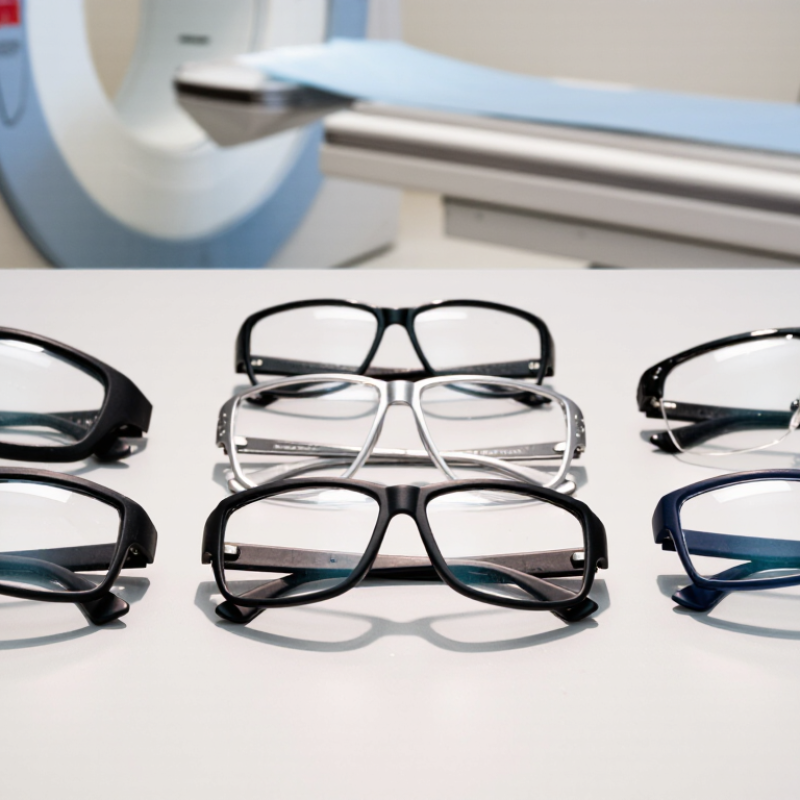
Lead glasses are eyewear with lenses designed to attenuate some radiation, particularly scattered X-rays. The lenses may use leaded glass or other materials with a stated lead-equivalent rating. During imaging work, radiation can scatter from a patient or nearby surfaces toward a worker’s eyes. Properly selected glasses can reduce that exposure. They do not block every type or amount of radiation. Not a force field.
The lead-equivalent rating helps describe how much radiation the lenses attenuate under specified test conditions. Protection also depends on fit, lens coverage, and the radiation environment. Wraparound frames or side shields can help cover areas near the temples, where scattered radiation may reach the eyes. A loose fit can leave gaps. Small details matter.
Lead glasses are one layer of protection, not a substitute for room shielding, distance, or appropriate work practices. A radiation safety professional can help assess whether eyewear suits a specific task and exposure level. Check the lenses and frames regularly for cracks, damage, or a poor fit. Scratches may seem minor, but damaged eyewear deserves attention. The label alone cannot tell the whole story.

A radiation protection rating usually expresses lead equivalence: how much attenuation a lens provides compared with a stated thickness of lead under specified test conditions. A 0.75 mm Pb rating is not a promise of identical protection at every X-ray energy. The result depends on the test spectrum, angle, and measurement method. Numbers need context.
Lens materials affect both protection and daily use. Leaded glass can offer clear vision and substantial attenuation, but it is heavier than many alternatives. Lead acrylic is often lighter, though it may scratch more easily. Neither material should be judged by appearance alone. Check the product documentation for the lead-equivalence rating, test conditions, and whether side protection was included. Tiny details matter.
Fit changes real-world coverage. A gap near the temple can let scattered radiation reach the eye, even when the lens rating looks strong on paper. In clinical settings, staff may compare eyewear specifications with local radiation-safety guidance and their actual procedures. That comparison is easy to overlook. Ratings also do not replace distance, shielding, or monitoring, and protective glasses are not intended for direct-beam exposure. A careful buyer should consider weight, fit, optical clarity, and documented testing together; sometimes the lightest pair is the one people wear consistently.
These are example lead-equivalence ratings commonly specified for front and side protection; they are not universal requirements or results for particular glasses. Lead equivalence describes attenuation compared with lead under stated X-ray test conditions. Compare ratings only when the test conditions are comparable, and check the applicable standard and product specifications. Lens materials such as lead glass and lead-acrylic should be assessed by their tested lead equivalence, not by appearance alone.
Choosing lead glasses starts with the procedure, not the frame. Interventional cardiology, dental imaging, and repeated fluoroscopy create different exposure angles and wear times. ICRP Publication 118 reports a recommended occupational lens-dose limit of 20 mSv per year, averaged over five years, with no year above 50 mSv. It also places the approximate threshold for radiation-related cataracts at 0.5 Gy. These figures support careful eye protection, but they do not predict an individual clinician’s dose.
Check the stated lead equivalence, lens coverage, and side protection. A wraparound design or side shields can matter when scatter reaches the eye from an oblique angle. Ask whether the glasses fit over prescription lenses and stay in place while looking down at a monitor. Small details count. A frame that slips during a long case may leave a gap exactly where protection is needed.
Weight and optical clarity deserve equal attention. Heavier glasses can press on the nose; tinted or distorted lenses may make fine work harder. ICRP dose limits are not a substitute for local dose monitoring or a radiation-safety assessment. Compare the product’s attenuation documentation with your workplace’s procedure mix, and involve a radiation-safety professional when exposure patterns are unclear. There is no perfect pair; comfort can be overlooked, even by experienced teams.
| Option | Best suited for | Coverage and design | Lead-equivalence checks | Fit and comfort factors | Key selection consideration |
|---|---|---|---|---|---|
| Lightweight wraparound glasses | Routine fluoroscopy and general radiology work | Curved lenses and side coverage can help reduce radiation reaching the eyes from oblique directions. | Confirm the documented lead equivalence for both the lenses and any side protection; values can differ by area and model. | Choose a stable fit that does not slide when the wearer looks down or moves between tasks. | A practical everyday choice when broad coverage and low weight are priorities. |
| Large-lens protective glasses | Long procedures and clinicians needing a wider field of view | Larger lenses cover more of the area around the eyes, but do not necessarily provide side protection. | Check the tested protection of the full lens area rather than assuming all large lenses have the same rating. | Assess lens size, nose-bridge support, and whether the frame remains comfortable during extended wear. | Useful when coverage is important, provided the larger frame fits securely and does not obstruct vision. |
| Glasses with integrated side shields | Interventional procedures where scattered radiation may approach from the side | Side shields extend coverage beyond the front lenses; the amount of coverage depends on their shape and fit. | Verify whether the side shields have a stated lead equivalence; front-lens specifications alone do not describe side protection. | Check for gaps near the temples and compatibility with other personal protective equipment. | Consider when lateral coverage is a priority; protective eyewear supplements, but does not replace, other radiation-safety measures. |
| Over-prescription protective glasses | Wearers who need their regular corrective glasses during clinical work | A larger frame is designed to fit over prescription eyewear, with coverage depending on the outer frame and side design. | Review the protection specifications for the complete protective frame, not the prescription glasses underneath. | Try the glasses with the usual prescription frame to check pressure, slipping, and peripheral vision. | A convenient option when contact lenses are unsuitable or prescription eyewear must remain in use. |
| Prescription lead glasses | Frequent users who need vision correction and protective eyewear in one frame | Prescription lenses are incorporated into a protective frame; lens shape and frame design affect the available coverage. | Confirm that the documented radiation-protection specification applies to the finished eyewear and its lens configuration. | Accurate fitting and alignment matter for clear vision and comfortable use throughout a shift. | Can avoid wearing two pairs, but prescription changes and repairs may require specialized service. |
| Lightweight, adjustable-frame glasses | Staff who wear protective eyewear for long periods or share equipment | Adjustable temples or nose supports can help position the lenses close to the face; coverage varies by frame. | Check the protection rating independently of frame weight or material; a lighter frame does not indicate a lower or higher rating. | Look for secure adjustment, even weight distribution, and compatibility with masks, caps, and other equipment. | Prioritize a repeatable fit, since gaps or poor positioning can reduce the intended coverage. |
| Clip-on protective lenses | Occasional use by prescription-glasses wearers who need a compact option | A clip-on attaches to regular eyewear; coverage depends on its dimensions and how closely it matches the underlying frame. | Check that the clip-on has its own documented lead-equivalence information and covers the intended viewing area. | Ensure it attaches securely without distorting vision, scratching prescription lenses, or leaving large edge gaps. | Convenient for portability, but fit and side coverage may be more limited than with a purpose-built protective frame. |
| Selection note: Lead equivalence, coverage, and fit are model-specific. Review the manufacturer’s test documentation and applicable local radiation-safety requirements before purchase. Protective glasses reduce exposure to the eyes but do not replace appropriate room shielding, distance, procedure technique, or other required protective equipment. | |||||
Choosing lead glasses is not just about lens darkness or frame style. Check the stated lead equivalence, usually measured in millimeters, and confirm it suits the imaging work and local radiation-safety guidance. The right choice depends on exposure conditions. Ask a qualified radiation-safety professional when specifications are unclear.
Seven useful styles to compare include
A snug, comfortable fit matters. Gaps can undermine coverage, while heavy frames may slide during a busy procedure.
Inspect the product documentation, lens condition, and frame fit before relying on any pair. Scratches, loose hinges, or poor alignment deserve attention.
Lead glasses are one part of radiation protection, not a substitute for approved shielding, safe positioning, or workplace procedures. I would not choose by appearance alone; that is an easy mistake. Even a well-fitting pair cannot guarantee a particular dose reduction in every setting.
A secure fit starts with the frame resting evenly on your nose, without sliding when you look down. Check that the lenses cover your eyes from the front and sides in your usual working posture. Small gaps matter. Side shields can help, but they do not replace room shielding or safe positioning. Fogging and pressure marks are practical warning signs: glasses worn inconsistently offer little protection.
Check the stated lead equivalence and test documentation, not just the product label. IEC 61331-3:2014 sets requirements for protective eyewear used against diagnostic X-rays. Ask your radiation safety officer to confirm that documentation matches your clinical X-ray conditions. ICRP Publication 118 recommends an occupational eye-lens dose limit of 20 mSv per year averaged over five years, with no single year above 50 mSv. These limits provide context; they do not prove a particular pair is adequate.
Clean lenses with a soft cloth and a manufacturer-approved solution. Avoid abrasive wipes, harsh chemicals, and leaving glasses loose in a drawer, where frames can bend. Inspect hinges, nose pads, lens edges, and coatings under bright light. Scratches may not be easy to see. If lenses are cracked, visibly distorted, or their protective records are unclear, set them aside and request professional assessment. A quick visual check is useful, but it cannot measure radiation attenuation.
Contact
KYOCERA SGS Precision Tools, Inc.
(330) 686-5700
150 Marc Drive
Cuyahoga Falls, OH 44223
Products
Resources