2026 Best CNC Vertical Turning Lathes for Global Buyers
Choosing among the 2026 Best Cnc Vertical Turning Lathes for Global Buyers requires more than comparing spindle power. A Cnc Vertical Turning Lathe may look impressive in a brochure, yet struggle with interrupted cuts, unstable foundations, or poor chip evacuation. Buyers should inspect the machine’s swing diameter, maximum workpiece weight, chuck design, spindle torque, tool capacity, and thermal stability. Small details matter. A hot bearing can change a precision job.
Peter Zelinski, a respected manufacturing technology editor, has repeatedly stressed a practical principle: “Automation cannot rescue a weak process.” That warning fits vertical turning. A reliable machine needs capable programming, repeatable workholding, verified tooling, and responsive service support. Ask suppliers for test-cut data, measured cycle times, energy information, and references from plants machining similar castings, rings, or large flanges. Video demonstrations help, but they do not replace an in-person acceptance test.
Global buyers should also examine controller familiarity, remote diagnostics, spare-parts access, operator training, and regional maintenance coverage. A low purchase price may become expensive when a critical encoder waits weeks for delivery. However, every ranking has limits. The “best” model depends on material, batch size, tolerance, floor space, and operator experience. I have seen technically advanced machines underperform because the fixture was poorly designed. That uncomfortable detail deserves attention. This guide compares leading options through practical capability, ownership risk, and measurable production value, helping buyers select a Cnc Vertical Turning Lathe with clearer expectations and fewer costly surprises.
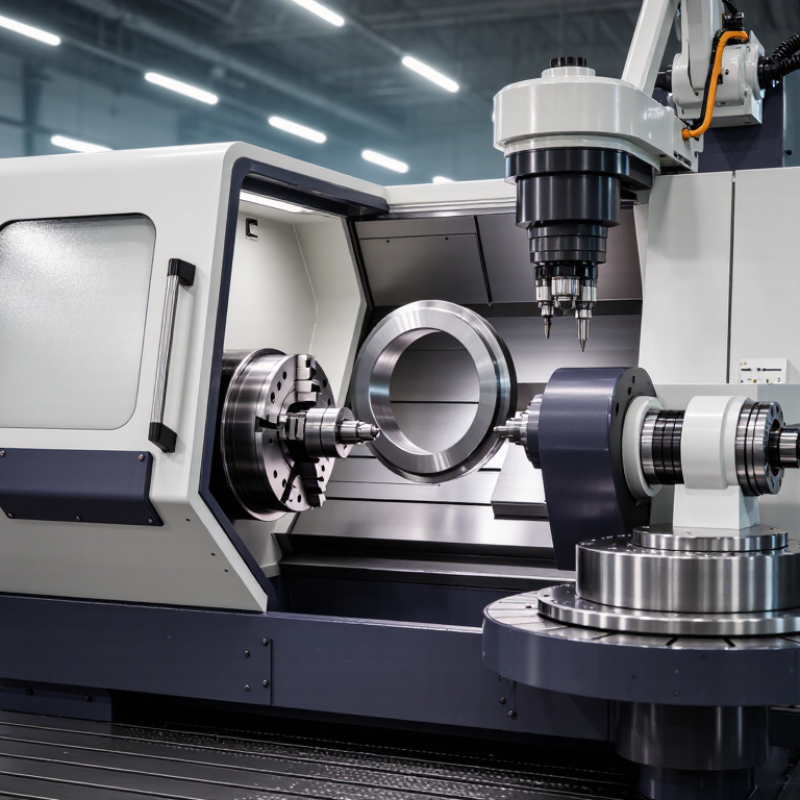
What Is a CNC Vertical Turning Lathe?
A CNC vertical turning lathe is a computer-controlled machine for turning large, heavy, or wide workpieces. Its spindle holds the workpiece vertically, while cutting tools move across the rotating surface. This arrangement uses gravity to improve stability during machining. It also reduces the risk of a heavy part slipping from the chuck.
The machine commonly performs facing, outer-diameter turning, boring, grooving, and threading. A turret carries several tools and changes them according to the programmed sequence. Operators usually set cutting speed, feed rate, tool offsets, and workpiece coordinates before machining begins. Coolant helps control heat, especially when cutting steel or cast materials. On the shop floor, chip control matters more than many buyers expect. Long chips can damage surfaces and interrupt automatic operation.
For global buyers, the table diameter, maximum turning height, spindle load, and motor power deserve close attention. Accuracy also depends on foundation quality, thermal control, tool condition, and operator setup. A larger machine is not automatically better. It may consume more energy and require greater installation space. I have seen specifications look impressive while access around the turret remained awkward. That detail is easy to miss. Buyers should request test-cut data, inspection records, control compatibility, and service response times. A realistic evaluation should include the actual material, part weight, tolerance, and production volume.
2026 Best CNC Vertical Turning Lathes for Global Buyers
What Is a CNC Vertical Turning Lathe?
A CNC vertical turning lathe is a computer-controlled machine that rotates a workpiece on a vertical spindle while cutting tools perform turning, boring, facing, and grooving operations. The representative figures compare common machine-size categories by maximum turning diameter and maximum workpiece height. Actual specifications vary according to machine configuration, tooling, spindle power, and manufacturer design.
Key Features of the Best 2026 Models
The best 2026 CNC vertical turning lathes combine rigidity, speed, and dependable control. Their vertical layout supports heavy workpieces with less fixture stress. A broad spindle range helps machinists handle castings, flanges, and hardened steel parts. High-torque motors matter during roughing cuts. Fast acceleration reduces idle time between operations.
Look for direct-drive spindles, high-resolution encoders, and thermal compensation. These features improve positioning accuracy during long production cycles. A stable box-way or linear-guide design can reduce vibration at deeper cutting depths. Automatic tool changers should offer repeatable alignment and practical capacity. Chip evacuation also deserves attention. Wet chips around the chuck create maintenance problems quickly.
Safety and service access are equally important. Interlocked guarding, clear viewing panels, and reliable overload protection support responsible operation. Remote diagnostics may shorten downtime, but they cannot replace skilled inspection. Check spindle runout, backlash, coolant flow, and tool-change repeatability before purchase. A machine can look advanced and still perform poorly in an unsuitable workshop. Floor strength, power quality, operator training, and local service coverage often decide the real result. Some specifications seem impressive on paper. Actual test cuts may reveal heat drift, awkward access, or slower setup than expected.
How to Compare CNC Vertical Turning Lathes
2026 Best CNC Vertical Turning Lathes for Global Buyers
How to Compare CNC Vertical Turning Lathes
Comparing CNC vertical turning lathes requires more than checking maximum diameter. Start with the work envelope, chuck capacity, spindle speed, and continuous torque. A large table may look impressive, yet insufficient torque can reduce cutting stability on heavy steel parts. Check axis travel against your largest planned component, including tool clearance and fixture height. Thermal compensation also matters during long production cycles. Ask for measured accuracy results, not only brochure values.
Practical evaluations should include test cuts using similar materials, tooling, and tolerances. Inspect surface finish, chip control, tool changes, and cycle time. Review the machine’s electrical requirements, floor loading, coolant arrangement, and operator access. Global buyers should confirm documentation, training, spare-part availability, and local service response. A machine that performs well but lacks support can become expensive downtime.
Tips: Request a machining trial before purchase. Compare torque charts at working speeds. Check maintenance access around the spindle and enclosure. Verify software compatibility with your existing programs. Do not ignore noise, vibration, or chip evacuation. These details affect daily productivity. One common mistake is choosing maximum capacity over actual production needs. A smaller, rigid machine may perform better for repeated medium-sized parts. Still, specifications can be difficult to compare fairly, because manufacturers may use different test conditions. Ask clear questions, record assumptions, and have an experienced machinist review the final proposal.
Buying Considerations for Global Buyers
When buying a CNC vertical turning lathe in 2026, global buyers should match the machine to real production conditions. Check maximum turning diameter, workpiece height, table load, spindle torque, and tool capacity. A large swing is not enough if the table cannot hold heavy castings safely. Ask for test-cut results using material similar to yours. Steel, stainless steel, and heat-resistant alloys can expose weaknesses quickly.
Power supply deserves careful attention. Confirm voltage, frequency, grounding requirements, and local installation rules before signing a purchase order. Also review positioning accuracy, repeatability, coolant capacity, chip evacuation, and thermal stability. A machine that performs well in a showroom may behave differently in a hot workshop with continuous shifts. I have seen buyers focus on speed and underestimate maintenance access. That mistake becomes expensive.
Service capability can decide the purchase. Request electrical drawings, operating manuals, spare-parts lists, remote support procedures, and operator training details. Clarify response times, warranty coverage, packaging protection, shipping terms, and installation responsibility. Ask for references from factories with comparable workloads, not only impressive facilities. Calculate total ownership cost, including tooling, energy, software updates, inspection equipment, and downtime. The cheapest quotation may not be the safest choice. Still, premium features can remain unused. Review your process honestly, and leave room for future work without buying capacity you cannot justify.

